

Tsitsi Dangarembga: The Writer Behind a Landmark African Story
From Nervous Conditions to international literary honours, her work has crossed fiction, film, cultural activism and free-expression advocacy.

Introduction
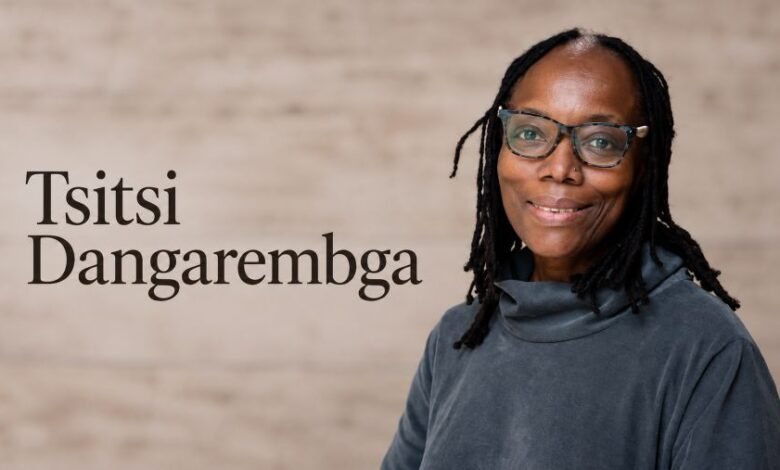
Tsitsi Dangarembga is a Zimbabwean novelist, filmmaker, playwright and essayist best known for Nervous Conditions. The novel became an important work in African literature and began the story of Tambudzai, a character Dangarembga later followed across two more books.
Her career did not stop with fiction. She trained in filmmaking, built film projects in Zimbabwe, supported women in cinema and became involved in public debates about freedom and social justice.
As of 2026, she remains active as a writer, filmmaker and cultural figure. Her recent work has also turned toward African systems of knowledge and ideas connected with Ubuntu.
Quick Facts About Tsitsi Dangarembga
| Fact | Details |
|---|---|
| Full name | Tsitsi Dangarembga |
| Born | 4 February 1959 |
| Birthplace | Mutoko, Zimbabwe |
| Nationality | Zimbabwean |
| Profession | Novelist, filmmaker, playwright, essayist |
| Education | Psychology at the University of Zimbabwe |
| Film training | German Film and Television Academy Berlin |
| Best-known book | Nervous Conditions |
| Other major novels | The Book of Not, This Mournable Body |
| Major nonfiction work | Black and Female |
| Current public role | Director of the Institute of Creative Arts for Progress in Africa |
| Major 2026 honour | Sharjah Lifetime Achievement in Literature Award |
Who Is Tsitsi Dangarembga?
Tsitsi Dangarembga is one of Zimbabwe’s best-known literary figures.
She became widely recognised after the publication of Nervous Conditions in 1988. The book follows Tambudzai, a young Zimbabwean girl dealing with education, gender, family expectations and colonial society.
The novel stood out fast.
It won the Africa region of the Commonwealth Writers’ Prize in 1989 and became widely studied in universities and literature courses.
Dangarembga later continued Tambudzai’s story through The Book of Not and This Mournable Body.
That third novel brought another major moment. This Mournable Body was shortlisted for the Booker Prize in 2020.
Early Life and Background
Dangarembga was born on 4 February 1959 in Mutoko, in what was then Southern Rhodesia and is now Zimbabwe.
Her parents worked in education.
When she was young, her family moved to England while her parents continued their studies. They returned to Rhodesia several years later.
That early movement between countries shaped her experience of language, culture and belonging.
She later attended Arundel School in what is now Harare.
Her education then took another turn.
In 1977, Dangarembga went to the University of Cambridge to study medicine. She did not finish the course and later returned to Zimbabwe.
She has spoken publicly about feeling isolated during that period and about the financial and cultural pressures she faced.
Back home, she studied psychology at the University of Zimbabwe.
That was also where writing became more serious.
Education and Move Into Writing
University life gave Dangarembga access to theatre.
She began writing plays and working with drama groups. One of her early published plays was She No Longer Weeps, released in 1987.
She also worked as an advertising copywriter.
But fiction kept pulling her back.
Her first novel became the work that changed her career.
Nervous Conditions was published in 1988 after she had faced difficulty finding a publisher closer to home.
The book was eventually released by The Women’s Press in London.
Then recognition followed.
Why Nervous Conditions Became So Important
Nervous Conditions tells its story through Tambudzai, a girl growing up in colonial Rhodesia.
Education sits at the centre.
So do gender and power.
The novel looks closely at what happens when opportunity comes with pressure, cultural conflict and unequal expectations.
It also follows relationships between women living under different social pressures.
The book was an important publishing first. It is widely recognised as the first English-language novel published by a Black Zimbabwean woman.
That gave the novel historical weight.
But readers stayed with it because of the story.
It won the Africa regional Commonwealth Writers’ Prize in 1989 and later became one of Dangarembga’s defining works.
The Tambudzai Trilogy
Dangarembga did not leave Tambudzai behind.
She returned to the character in The Book of Not, published in 2006.
The story continues during the final years of white minority rule and examines school life, race, ambition and identity.
Then came This Mournable Body in 2018.
By this point, Tambudzai is an adult.
The setting has changed too.
Zimbabwe is independent, but the character still faces economic strain, personal disappointment and social pressure.
The novel completed what is now commonly called the Tambudzai trilogy.
In 2020, This Mournable Body reached the Booker Prize shortlist.
That introduced Dangarembga’s work to another large international audience.
Her Film Career
Writing books is only one side of her work.
Dangarembga also trained in filmmaking in Germany.
She studied directing and screenwriting at the German Film and Television Academy Berlin before returning to Zimbabwe.
She later founded Nyerai Films in Harare.
Her name is connected with several Zimbabwean film projects.
One commonly misunderstood credit involves Neria.
Dangarembga wrote the story on which the film was based. The screenplay itself was written by Louise Riber.
That distinction matters.
Dangarembga later wrote and directed Everyone’s Child, another recognised Zimbabwean film.
Her other film work includes projects such as On the Border, Kare Kare Zvako, Growing Stronger, I Want a Wedding Dress and Nyami Nyami Amaji Abulozi.
Kare Kare Zvako received international festival recognition, including the Golden Dhow at the Zanzibar International Film Festival in 2005.
Work Supporting African Film
Dangarembga also helped build spaces for other filmmakers.
She became closely involved with the Institute of Creative Arts for Progress in Africa, usually called ICAPA.
She serves as its director.
The organisation works around creative production, cultural development and African arts.
She was also connected with the International Images Film Festival for Women.
The festival helped create more room for women’s stories and women working behind the camera.
Her work here matters because it goes beyond her own books and films.
She has spent years helping build platforms where other African creatives can work.
Black and Female
Dangarembga moved more directly into nonfiction with Black and Female.
Published in 2022, the book brings together essays dealing with race, gender, colonial history, identity and personal experience.
The tone is different from her novels.
The concerns are familiar, though.
She writes about the systems that shape people’s choices and the pressures that follow them.
The book also gives readers a clearer look at ideas that have appeared across much of her creative work.
Major Awards and Honours
Dangarembga has received major international recognition across literature, human rights and cultural work.
In 2021, she received the PEN Pinter Prize.
That same year, she received PEN International’s Freedom of Expression Award.
She also won the Peace Prize of the German Book Trade in 2021.
The award carried a €25,000 prize.
In 2022, Yale University named her a Windham-Campbell Prize winner in fiction.
The prize came with $165,000.
She spent the 2022–23 academic year as a Joy Foundation Fellow at Harvard University’s Radcliffe Institute.
In 2024, the University of California, Merced, selected her for the Alice and Clifford Spendlove Prize in Social Justice, Diplomacy and Tolerance.
Then came another major honour.
In January 2026, Dangarembga received the Sharjah Lifetime Achievement in Literature Award during the Sharjah Festival of African Literature.
Her 2020 Arrest and 2023 Acquittal
One part of Dangarembga’s public record needs careful wording.
On 31 July 2020, she was arrested in Harare while taking part in a peaceful anti-government protest.
She was carrying signs calling for reform and the release of journalist Hopewell Chin’ono.
The legal case continued for two years.
In September 2022, a lower court convicted her on an incitement-related charge. She received a fine and a suspended prison sentence.
She challenged the ruling.
On 8 May 2023, Zimbabwe’s High Court overturned the conviction.
She was acquitted.
That is the current legal outcome.
So describing her today simply as a convicted activist would give readers an outdated and misleading picture of the case.
Current Work
Dangarembga remains professionally active.
During the 2025–26 academic year, she was a Fellow at the Wissenschaftskolleg zu Berlin.
Her research project was titled “Ubuntu 2.0: Insights for a More Sustainable Future from Ancient Bantu-Speaking Cultures.”
The project looks at ideas of personhood, society and knowledge found in African traditions.
Her recent public appearances have also discussed these subjects.
A 2026 literary event in Oslo described her as working on new nonfiction focused on indigenous African institutional knowledge.
She also continues her connection with ICAPA in Harare.
So her present work sits across several areas: writing, cultural thought, African knowledge systems and creative institutions.
Personal Life
Reliable public profiles identify German filmmaker and editor Olaf Koschke as Dangarembga’s husband.
They have three children.
Dangarembga has continued to live and work in Zimbabwe while maintaining strong professional links with Europe and international literary institutions.
Her public work remains the clearer focus.
She rarely builds her profile around celebrity-style personal exposure.
Tsitsi Dangarembga Net Worth
There is no reliable public financial record that supports a specific personal net-worth figure.
Generic wealth websites often publish estimates for writers, but such figures should not be treated as established facts without financial filings or equivalent evidence.
There are, however, documented monetary awards linked to her career.
The Peace Prize of the German Book Trade carried €25,000 in 2021.
Her 2022 Windham-Campbell Prize carried $165,000.
These figures show award income only. They do not provide enough evidence to calculate her total wealth.
Why Her Work Still Matters
Dangarembga’s career crosses several generations of Zimbabwean history.
Her fiction began by looking at colonial education, gender and family pressure.
Later books moved into independence and its disappointments.
Her filmmaking opened another route.
Her public work then pushed into cultural institutions, women’s participation in film, free expression and African systems of thought.
That long range makes her difficult to place in one box.
Writer fits.
Filmmaker fits too.
But her work now stretches far beyond either label.
Final Thought
Tsitsi Dangarembga built her reputation with Nervous Conditions, but that book was only the start.
She continued the Tambudzai story across three novels, worked in film, helped support women filmmakers and became an outspoken defender of artistic and civic freedom.
Her career is still moving.
In 2026, she remains active in literary and academic circles while developing work around Ubuntu and African knowledge systems.
For readers meeting her name for the first time, the main point is simple: she is one of Zimbabwe’s most recognised writers, and her influence reaches literature, cinema and public cultural life.
Frequently Asked Questions
Who is Tsitsi Dangarembga?
Tsitsi Dangarembga is a Zimbabwean novelist, filmmaker, playwright and essayist best known for Nervous Conditions.
When was Tsitsi Dangarembga born?
She was born on 4 February 1959 in Mutoko, Zimbabwe.
What is Tsitsi Dangarembga famous for?
She is best known for writing Nervous Conditions and the wider Tambudzai trilogy.
What books did Tsitsi Dangarembga write?
Her major books include Nervous Conditions, The Book of Not, This Mournable Body and Black and Female.
Was This Mournable Body nominated for the Booker Prize?
Yes. It was shortlisted for the Booker Prize in 2020.
Is Tsitsi Dangarembga also a filmmaker?
Yes. She trained in film directing and screenwriting and has worked on several Zimbabwean film productions.
What happened to Tsitsi Dangarembga’s court case?
Her 2022 conviction linked to a 2020 protest was overturned by Zimbabwe’s High Court in May 2023, and she was acquitted.
What is Tsitsi Dangarembga doing now?
As of 2026, she remains active as a writer, filmmaker and ICAPA director and has been working on research connected with Ubuntu and African knowledge systems.