

The electronics industry is experiencing continuous growth as technology becomes more advanced and businesses develop innovative products for different applications. From smartphones and computers to automotive systems and industrial equipment, electronic devices rely on printed circuit boards (PCBs) to perform essential functions. As product designs become more sophisticated, manufacturers need efficient production methods, accurate assembly processes, and reliable quality standards. Turnkey pcb assembly has become an important solution for businesses looking to simplify electronics manufacturing by combining multiple production stages through a coordinated service.
Modern electronics manufacturing requires more than producing individual circuit boards. It involves design preparation, component sourcing, board fabrication, assembly, inspection, and testing. Managing these stages efficiently can help businesses reduce production challenges and maintain consistent product quality. Understanding the role of modern PCB manufacturing solutions is therefore important for companies developing electronic products.
The Importance of PCB Manufacturing in Modern Technology
Printed circuit boards provide the foundation for electronic devices by connecting different components through conductive pathways. These pathways allow electrical signals and power to move between processors, sensors, connectors, and other components.
As electronic devices become smaller and more powerful, PCB designs must support greater functionality within limited physical space. Manufacturers now use different circuit board configurations, including single-layer, double-layer, and multilayer designs, depending on application requirements.
Modern PCB manufacturing focuses on precision, material quality, and production consistency. Advanced fabrication equipment helps create accurate circuit patterns, while improved manufacturing techniques support complex electronic layouts.
Several factors contribute to successful PCB production:
- Accurate design: Proper circuit layouts help prevent electrical connection problems.
- Material selection: Suitable substrates support thermal and electrical performance.
- Production efficiency: Advanced equipment helps improve manufacturing consistency.
- Quality inspection: Testing identifies potential defects before products reach customers.
- Design flexibility: Different PCB configurations support various electronic applications.
These elements make PCB manufacturing an essential part of modern product development.
Understanding Turnkey PCB Assembly
Turnkey PCB assembly is a manufacturing approach in which a provider manages multiple stages of the electronics production process. Instead of coordinating separate suppliers for fabrication, components, and assembly, businesses can work with one manufacturing partner.
Depending on the provider and project requirements, turnkey services may include PCB fabrication, electronic component sourcing, surface mount assembly, through-hole assembly, soldering, inspection, and functional testing.
This approach can simplify production management, particularly for businesses that lack internal electronics manufacturing facilities.
Some important advantages include:
Simplified coordination: Managing several production stages through one provider can reduce communication difficulties.
Time efficiency: Coordinated manufacturing processes can help minimize delays between different production stages.
Consistent quality management: A unified production workflow can make inspection and quality monitoring easier.
Production flexibility: Businesses can select manufacturing solutions according to their product requirements.
Better project management: Working with one manufacturing partner can simplify discussions about specifications, materials, and production schedules.
These advantages make turnkey assembly an attractive option for startups, established electronics companies, and product developers.
The Role of Advanced PCB Assembly Technologies
PCB assembly technology continues to improve as electronic components become smaller and circuit designs become more complex. Manufacturers use different assembly methods to meet specific production requirements.
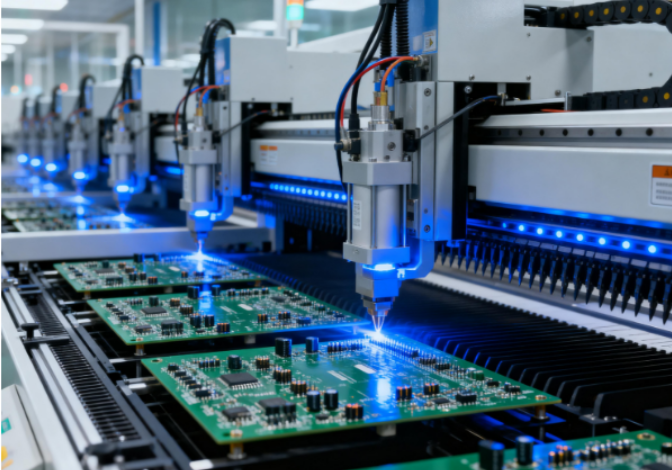
Surface Mount Technology (SMT) is one of the most widely used approaches. It allows electronic components to be mounted directly onto the surface of a circuit board. Automated placement machines help position components accurately, supporting efficient production.
Through-hole technology is another important assembly method. It involves inserting component leads through holes in the circuit board before soldering them into position. This technique is useful for components that require stronger mechanical connections.
Some projects combine SMT and through-hole assembly to achieve the required electrical and mechanical performance.
Modern assembly processes may also include automated solder paste inspection, reflow soldering, automated optical inspection, and X-ray inspection. These technologies help manufacturers improve assembly accuracy and identify potential problems.
Why Quality Control Matters in Electronics Manufacturing
Quality control is essential because electronic devices depend on accurate electrical connections and reliable component performance. Manufacturing defects can affect product functionality, increase repair costs, and create delays.
A structured inspection process helps identify problems throughout production. Automated Optical Inspection (AOI) can detect visible defects, including missing components and soldering irregularities. X-ray inspection can help examine hidden solder connections, particularly in complex component packages.
Electrical testing evaluates circuit continuity and checks for short circuits. Functional testing goes further by determining whether the assembled board operates according to its intended specifications.
Effective quality management provides several benefits:
- Improved product reliability.
- Reduced manufacturing defects.
- Consistent assembly standards.
- Better production efficiency.
- Greater confidence in finished electronic products.
Businesses should consider inspection and testing capabilities when selecting a PCB manufacturing provider.
Applications Across Different Industries
Modern PCB manufacturing and assembly support a wide range of industries. Each sector has specific requirements regarding circuit design, operating conditions, and product performance.
Consumer Electronics: Smartphones, laptops, televisions, cameras, and household appliances depend on circuit boards for their essential functions.
Automotive Technology: Vehicles use PCBs in navigation systems, sensors, battery management, lighting controls, and electronic control units.
Medical Equipment: Diagnostic instruments, monitoring systems, and healthcare devices require dependable electronic assemblies.
Industrial Automation: Robotics, manufacturing equipment, and control systems rely on circuit boards for accurate and continuous operation.
Telecommunications: Networking equipment, communication devices, and signal-processing systems use advanced PCB designs to support data transmission.
These applications demonstrate how PCB manufacturing contributes to technological development across different markets.
Choosing a Reliable PCB Manufacturing Partner
Selecting the right manufacturing partner is an important decision for businesses developing electronic products. A suitable provider should understand project specifications and have the technical capabilities needed to support fabrication and assembly requirements.
Before selecting a provider, businesses should evaluate manufacturing experience, available assembly technologies, component sourcing capabilities, inspection procedures, and production capacity.
Communication is another important consideration. Manufacturers and customers should discuss design files, material specifications, component requirements, and delivery expectations before production begins.
FastTurn PCBA is focused on PCB manufacturing and assembly solutions for businesses with different electronic project requirements. Companies exploring its services can evaluate their fabrication needs, assembly specifications, and production goals to identify suitable manufacturing options.
Working with an appropriate manufacturing partner can help simplify project coordination and support more organized production workflows.
The Future of Electronics Manufacturing
The future of electronics manufacturing will be influenced by automation, miniaturization, advanced materials, and increasingly sophisticated circuit board designs. Manufacturers are adopting improved production equipment to increase accuracy and support complex electronic assemblies.
Demand for flexible PCBs, high-density interconnect technology, multilayer circuit boards, and efficient assembly processes is also expected to remain important as electronic products continue evolving.
Businesses will increasingly look for manufacturing approaches that support faster development, consistent quality, and adaptable production capabilities. Coordinated assembly services can play a valuable role in meeting these requirements.
Conclusion
PCB manufacturing and assembly remain essential to the development of modern electronic products. From advanced fabrication techniques to automated component placement and quality testing, every production stage contributes to the performance of finished devices. Turnkey solutions offer businesses a coordinated approach to managing different manufacturing requirements while simplifying production activities. By focusing on appropriate technologies, quality standards, and reliable manufacturing partnerships, companies can improve their electronics development processes. FastTurn PCBA is relevant to this evolving industry through its focus on PCB manufacturing and assembly solutions for modern electronic applications.