

Roger Bootle: Career, Education, Books and Economic Views
Meet the British economist who founded Capital Economics, advised UK policymakers, and became a familiar voice in financial journalism.

Introduction
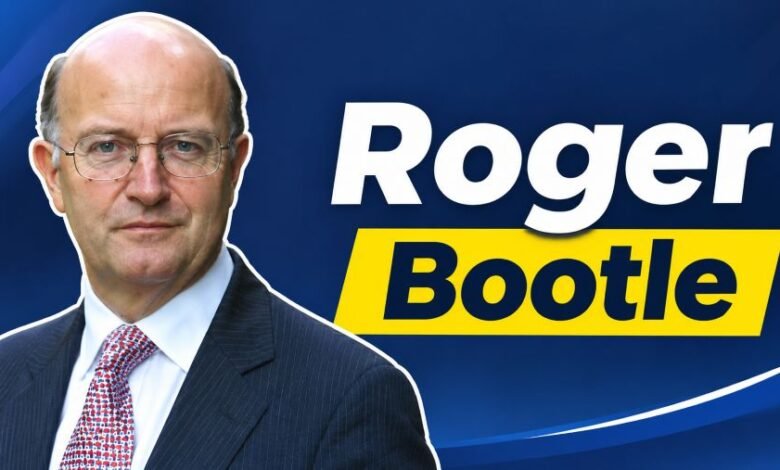
Roger Bootle is a well-known British economist. He is also an author and financial commentator. Many readers know him for founding Capital Economics in 1999.
His career began in academic economics. Later, he worked in banking and economic research. He also advised British policymakers and wrote several books about the economy.
His views often spark debate. He has written about inflation, financial crises, Brexit, and artificial intelligence.
So, who is Roger Bootle? Here is a closer look at his education, professional journey, books, and achievements.
Roger Bootle Quick Facts
| Detail | Information |
|---|---|
| Full Name | Roger Paul Bootle |
| Known As | Roger Bootle |
| Birth Year | 1952 |
| Nationality | British |
| Profession | Economist, Author, Financial Commentator |
| Education | University of Oxford |
| Colleges | Merton College and Nuffield College |
| Field of Study | Philosophy, Politics and Economics |
| Known For | Founding Capital Economics |
| Company Founded | Capital Economics |
| Founded In | 1999 |
| Former Employer | HSBC |
| Former Position | Group Chief Economist |
| Parliamentary Experience | Adviser to the House of Commons Treasury Committee |
| Major Award | Wolfson Economics Prize (2012, team award) |
| Notable Books | The Death of Inflation, The Trouble with Markets, The Trouble with Europe |
| Current Professional Association | Capital Economics |
Who Is Roger Bootle?
Roger Bootle is a British economic expert. His work covers national and international economies.
He has spent decades studying financial markets. His research often focuses on economic growth, inflation, and government policy.
But his career goes beyond research.
He founded Capital Economics, an independent economic research company. It provides forecasts and analysis for businesses, investors, and financial institutions.
He also became known through journalism. His columns discuss major economic issues in simple, direct terms.
Over the years, he has questioned widely accepted economic ideas. His published views on the European Union and monetary policy have attracted particular attention.
Roger Bootle Early Life and Background
Roger Paul Bootle was born in June 1952.
He grew up in Britain. However, reliable public information about his childhood is limited.
His early family background is not widely documented. There are also few confirmed details about his school years before university.
What is clear is his academic path.
He studied economics-related subjects at Oxford. That education helped prepare him for a long career in financial research and economic policy.
Roger Bootle Education
Bootle attended the University of Oxford.
He studied Philosophy, Politics and Economics at Merton College. This course is commonly called PPE.
His education also included postgraduate economics studies at Nuffield College.
Economics became his main professional interest.
After completing his studies, he taught economics at Oxford colleges during the 1970s.
Teaching was his first career step. Banking came next.
Roger Bootle Career Beginnings
Bootle started his professional journey in education.
During the late 1970s, he worked as an economics lecturer at Oxford.
He then entered the financial sector.
In 1978, he joined Citibank in London. His work involved the money markets.
This gave him practical banking experience. He could now connect economic theory with real financial decisions.
He later joined the Confederation of British Industry, known as the CBI.
There, he worked on economic policy.
His next roles involved economic forecasting and financial research, including work at Capel-Cure Myers.
These positions built his experience before he became a senior economist in international banking.
Roger Bootle at HSBC
One important chapter involved HSBC.
Bootle worked in senior economic research positions associated with Midland Bank and HSBC.
He eventually became Group Chief Economist at HSBC.
This was a major responsibility.
His work involved assessing economic conditions, financial markets, and future risks.
Banks need economic forecasts to understand changing markets. Bootle’s research helped support that work.
His banking experience later became useful when he started his own economic research company.
Founding Capital Economics
In 1999, Roger Bootle founded Capital Economics.
He wanted to build an independent economic research business.
The company focused on forecasts and economic analysis. Its research covered the United Kingdom and global markets.
Topics included inflation, interest rates, exchange rates, property markets, and economic growth.
The business grew over time.
In 2014, private equity firm LDC invested in Capital Economics.
Another major business deal followed in 2018.
Phoenix Equity Partners acquired a controlling stake in the company. The transaction valued Capital Economics at approximately £95 million.
Bootle continued his association with the business.
His role later included serving as Senior Independent Advisor and Non-Executive Director.
Capital Economics remains one of the main reasons his name is familiar in economic research.
Roger Bootle Government Advisory Work
Bootle also worked with British policymakers.
During the 1990s, he served on a panel of independent economic advisers to Chancellor Kenneth Clarke.
The group became informally known as the Wise Men.
He later served as a Specialist Adviser to the House of Commons Treasury Committee.
This advisory service ran from 1998 to 2017.
The committee examines financial and economic matters. Independent advisers provide specialist knowledge for its work.
Bootle also held an academic connection with Manchester Business School.
His professional experience includes economic advisory work for Deloitte.
These appointments show how his career moved between financial services, public policy, and economic research.
Roger Bootle Books
Writing became another major part of his career.
He has published books about economic problems, financial markets, and changes in technology.
The Death of Inflation (1996)
This is one of his best-known books.
It examines why inflation could remain lower than many economists expected.
The book attracted considerable attention and reached an international audience.
Money for Nothing (2003)
This book discusses financial wealth and asset prices.
It also considers problems that can develop when financial markets become disconnected from economic conditions.
The Trouble with Markets (2009)
This book examines the global financial crisis.
Bootle discusses problems in banking, financial regulation, and the wider economic system.
He also considers possible responses to those problems.
The Trouble with Europe (2014)
This book focuses on European economic issues.
It discusses the European Union, the euro, and Britain’s relationship with Europe.
A revised fifth edition appeared in 2026.
The AI Economy (2019)
Its full title is The AI Economy: Work, Wealth and Welfare in the Robot Age.
The book asks how artificial intelligence could change jobs and economic growth.
It also considers wages, productivity, and the distribution of wealth.
These publications cover very different subjects. Still, they share a common interest: how economic change affects people, businesses, and governments.
Roger Bootle Awards and Recognition
Bootle has received recognition for his work.
One major achievement came in 2012.
He and a team from Capital Economics won the Wolfson Economics Prize.
The competition asked how a country could manage leaving the eurozone.
Their proposal won the £250,000 award.
The prize was awarded to the team, rather than to Bootle alone.
In the same year, Bootle received the Economics Commentator of the Year award at The Comment Awards.
He is also an Honorary Fellow of the Institute of Actuaries.
These achievements reflect his work in economic research and public commentary.
Roger Bootle and Brexit
Bootle is known for his views on Britain’s relationship with the European Union.
He publicly supported Brexit.
His arguments often focused on economic policy, monetary arrangements, and national decision-making.
He also questioned aspects of the eurozone’s design.
These subjects appear throughout his writing.
His book The Trouble with Europe discusses the economic and political questions surrounding European integration.
But views on Brexit remain disputed.
Economists disagree about its costs, benefits, and long-term effects.
Bootle’s published arguments represent his own analysis within that wider debate.
Roger Bootle as a Financial Journalist
Bootle has also worked as an economics columnist.
He is particularly associated with The Daily Telegraph.
His writing addresses important economic questions.
Interest rates are one example. Inflation and government spending are others.
He has also discussed financial crises and Britain’s economic outlook.
His articles often question existing policies or expectations.
That direct approach has made him a familiar name among readers interested in finance and economics.
Roger Bootle Personal Life
Roger Bootle keeps much of his private life outside public discussion.
His professional achievements are well documented.
However, reliable information about his spouse, children, and wider family is limited.
For that reason, personal relationships and family names should not be presented without stronger confirmation.
Most established public profiles focus on his education, career, publications, and advisory roles.
Roger Bootle Net Worth
Roger Bootle’s personal net worth is not publicly confirmed.
His business career includes founding Capital Economics.
The company was valued at approximately £95 million during its 2018 investment transaction.
However, this was a company valuation.
It does not represent his personal wealth.
His current assets, salary, and total investment holdings are not established through reliable public financial disclosures.
What Is Roger Bootle Doing in 2026?
Roger Bootle remains associated with Capital Economics.
His listed positions include Senior Independent Advisor and Non-Executive Director.
He also continues contributing to economic discussions through his published writing.
The revised 2026 edition of The Trouble with Europe reflects his continuing interest in European economic affairs.
His work still covers questions facing Britain and the global economy.
Roger Bootle Career Timeline
| Year or Period | Career Event |
|---|---|
| 1970s | Studied at the University of Oxford |
| Late 1970s | Taught economics at Oxford |
| 1978 | Worked at Citibank |
| 1979–1981 | Worked at the Confederation of British Industry |
| 1980s | Held economic research positions in financial services |
| 1990s | Worked in senior economic roles at Midland Bank and HSBC |
| 1990s | Advised Chancellor Kenneth Clarke |
| 1996 | Published The Death of Inflation |
| 1998–2017 | Advised the House of Commons Treasury Committee |
| 1999 | Founded Capital Economics |
| 2003 | Published Money for Nothing |
| 2009 | Published The Trouble with Markets |
| 2012 | Won the Wolfson Economics Prize with his team |
| 2014 | Published The Trouble with Europe |
| 2018 | Capital Economics announced a major investment deal |
| 2019 | Published The AI Economy |
| 2026 | Revised edition of The Trouble with Europe published |
Final Thought
Roger Bootle has built a long career in economics.
He started in education. Then came banking, public policy, and independent economic research.
Founding Capital Economics was a major achievement.
His books and newspaper columns also brought his ideas to a wider audience.
People may agree or disagree with his economic views. Still, his professional record is clear.
He remains a recognised British economist whose work connects financial research with public debate.
Frequently Asked Questions
1. Who is Roger Bootle?
Roger Bootle is a British economist, author, and financial commentator. He founded Capital Economics in 1999.
2. When was Roger Bootle born?
He was born in June 1952, according to UK company records.
3. Where did Roger Bootle study?
He studied at the University of Oxford, including Merton College and Nuffield College.
4. What is Roger Bootle famous for?
He is best known for founding Capital Economics, working as HSBC Group Chief Economist, and writing books about economic issues.
5. What company did Roger Bootle establish?
He established Capital Economics in 1999. The company provides independent economic forecasts and research.
6. Did Roger Bootle win the Wolfson Economics Prize?
Yes. He and his Capital Economics team won the prize in 2012 for a proposal concerning a country’s departure from the eurozone.
7. What books has Roger Bootle written?
His notable books include The Death of Inflation, Money for Nothing, The Trouble with Markets, The Trouble with Europe, and The AI Economy.
8. What is Roger Bootle’s net worth?
His personal net worth has not been reliably disclosed. Public company valuations should not be treated as his personal wealth.