
Introduction
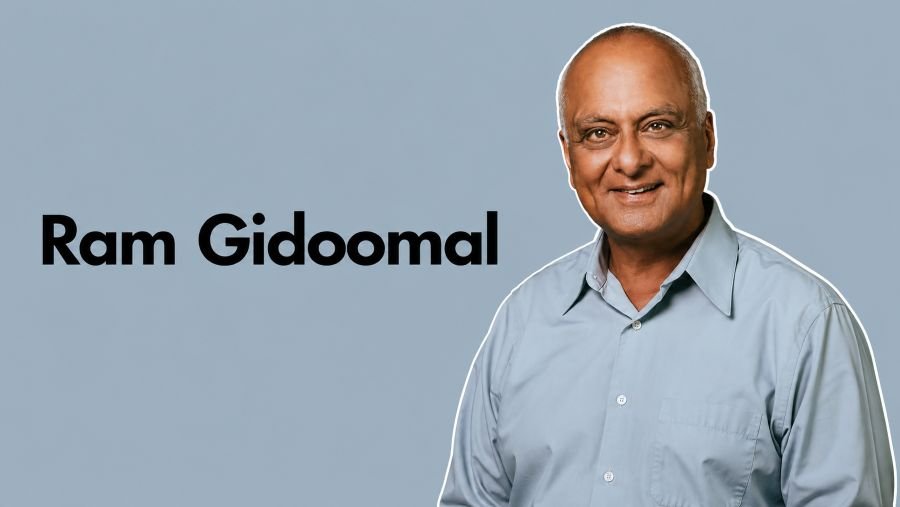
Ram Gidoomal CBE is a British businessman, social entrepreneur, author and philanthropist known for using his professional experience to support charitable and social causes.
He rose to senior leadership within a major international company before leaving full-time corporate work to concentrate on poverty reduction, ethical business, racial understanding and community development.
His journey from a refugee childhood to respected public leadership is built around resilience, generosity and responsible business.
Quick Bio
| Field | Verified information |
|---|---|
| Full name | Balram Gidoomal |
| Common name | Ram Gidoomal |
| Honour | Commander of the Order of the British Empire |
| Gender | Male |
| Birth country | Kenya |
| Childhood home | Mombasa, Kenya |
| National identity | British |
| Profession | Businessman, social entrepreneur, author and philanthropist |
| Education | Physics studies at Imperial College London |
| Former major role | UK Group Chief Executive and Group Vice-Chairman of the Inlaks Group |
| Spouse | Sunita Gidoomal |
| Children | Three |
| Grandchildren | Seven |
| Religion | Christianity |
| Known for | Ethical business, charitable leadership and social enterprise |
Who Is Ram Gidoomal?
Ram Gidoomal is a former international business executive who later devoted much of his working life to charitable organisations, fair trade, education and social enterprise.
His full name is Balram Gidoomal, although he is widely known professionally as Ram Gidoomal.
He became particularly recognised for leading the UK operations of the Inlaks Group, supporting the Christmas Cracker Charity Trust and establishing South Asian Concern.
His public career has also included university governance, government advisory work, business-ethics leadership and two campaigns to become Mayor of London.
Early Life in Kenya
Ram Gidoomal grew up in Mombasa during the 1950s and 1960s.
His family belonged to an Indian trading community whose members had previously moved from the Indian subcontinent to East Africa.
He attended the Aga Khan school in Mombasa, where he became its first non-Muslim head boy.
This early leadership role placed him in a culturally and religiously diverse environment. His childhood included Hindu, Sikh and Muslim influences that later shaped his understanding of different communities.
Moving to Britain as a Refugee
Gidoomal’s family was forced to leave Kenya while he was still a teenager.
They moved to Britain and had to rebuild their lives after losing the security and social position they had enjoyed in East Africa.
The move created financial, cultural and personal challenges. He entered a new education system and experienced the difficulties faced by immigrant families arriving in Britain during that period.
These experiences later influenced his interest in racial equality, refugee stories, minority businesses and cooperation between different cultural communities.
Education at Imperial College London
After continuing his education in London, Gidoomal studied physics at Imperial College London.
His studies included undergraduate and postgraduate academic work. The analytical skills developed through physics later supported his first professional position in banking.
The University of Bristol later recognised his educational, business and charitable achievements by awarding him an honorary Doctor of Laws in 2002.
He also developed a long relationship with higher education through university boards, ethics committees, visiting teaching and public appointments.
Beginning His Professional Career
Gidoomal started his working life as an operations research analyst at Lloyds Bank International.
The position offered a secure career, but he later left banking to join an international family-connected business based in Geneva.
This move opened the way for him to gain experience in management, international trade, food production and marketing.
His ability to combine analytical thinking with commercial leadership helped him rise through the organisation.
Leadership of the Inlaks Group
By 1991, Gidoomal had become UK Group Chief Executive and Group Vice-Chairman of the Inlaks Group.
The international business employed approximately 7,000 people across 15 countries.
His responsibilities involved managing operations across different markets, cultures and economic conditions. He reached a level of success that brought him considerable financial security and influence.
However, corporate achievement did not remain his only priority. He increasingly questioned how his skills and resources could create a wider social benefit.
The Life-Changing Visit to India
A major turning point came during a business visit to India in 1985.
Gidoomal visited an extremely poor community in Bombay, now known as Mumbai. The living conditions he witnessed had a lasting effect on him.
The experience encouraged him to reconsider the relationship between wealth, responsibility and human need.
He began moving away from a career centred mainly on commercial success and towards work that could address poverty, inequality and social exclusion.
Leaving Corporate Life
Gidoomal took early retirement from full-time corporate leadership at around the age of 40.
Rather than ending his working life, the decision marked the beginning of a new stage focused on charity, ethical enterprise and public service.
He applied the same planning, management and fundraising abilities used in international business to organisations supporting vulnerable communities.
This transition became one of the defining features of his public story.
Christmas Cracker Charity Trust
Gidoomal co-founded the Christmas Cracker Charity Trust.
The initiative encouraged young people from churches across the United Kingdom to raise money for relief and development projects in lower-income countries.
More than 50,000 young people became involved, while the campaign raised over £5 million for charitable causes.
The project demonstrated Gidoomal’s ability to connect fundraising with education, youth participation and long-term social awareness.
South Asian Concern
Gidoomal founded South Asian Concern in 1989 with his wife, Sunita, and a group of friends.
The organisation works with South Asian communities in Britain, the wider diaspora and partner organisations in South Asia.
Its work has focused on building connections, supporting Christian outreach and improving understanding of South Asian cultures and communities.
Gidoomal continues to be publicly identified as chairman of South Asian Concern.
Fair Trade and Social Enterprise
Gidoomal has supported several organisations working in fair trade, sustainable development and social investment.
He served as chairman of Traidcraft plc, one of Britain’s best-known fair-trade businesses.
He was also chairman of CottonConnect, which works to improve cotton supply chains and support farmers through more sustainable farming practices.
His former leadership of Allia connected him with social finance, community projects and businesses designed to create a positive public impact.
Business Ethics and Responsible Leadership
Ethical business has remained one of the central themes of Gidoomal’s later career.
He has served as a vice-president of the Institute of Business Ethics, where his experience supports discussions about integrity, corporate responsibility and trustworthy leadership.
He has publicly explained that responsible organisations should consider more than profit. Their decisions can also affect workers, customers, communities and the environment.
His multi-industry leadership journey shows how professional experience gained in one field can later support work with much wider public value.
Government and Public Appointments
Gidoomal has held appointments connected with government bodies, universities, regulation and public accountability.
His former roles include serving on the board of the Parliamentary and Health Service Ombudsman and working with the Food Standards Agency.
He was also involved with the Cabinet Office’s Better Regulation Task Force and the UK Border Agency’s Complaints Audit Committee.
Other positions included work with the Equality and Human Rights Commission, the Office of the Independent Adjudicator for Higher Education and St George’s medical school.
Connection With Imperial College
Gidoomal’s relationship with Imperial College continued long after his student years.
He became a crown-appointed member of the university’s Court and Council and chaired its Research Ethics Committee.
The college also recognised him as an honorary fellow.
His university work brought together his interests in education, governance, research ethics and responsible institutional leadership.
London Mayoral Campaigns
Gidoomal entered electoral politics as a candidate for the Christian Peoples Alliance.
He contested the first election for Mayor of London in 2000 and finished fifth.
He stood for the position again in 2004.
Although he did not win either election, the campaigns increased public awareness of his views on employment, community cooperation, ethical leadership and the participation of faith communities in civic life.
CBE and Other Honours
Gidoomal was made a Freeman of the City of London in 1997.
In 1998, he was appointed Commander of the Order of the British Empire.
The CBE recognised his contribution to race relations and the Asian business community.
His other distinctions include honorary academic awards, professional fellowships and recognition from institutions connected with management, education and public service.
Books Written by Ram Gidoomal
Gidoomal has written and contributed to books exploring migration, culture, religion, business and social responsibility.
His memoir, My Silk Road: The Adventures & Struggles of a British Asian Refugee, presents the story of his family’s movements from India to East Africa and later to Britain.
The book also discusses his education, corporate career, Christian faith and decision to devote more of his life to helping others.
His other published works include Sari ’n’ Chips, The UK Maharajahs, Karma ’n’ Chips, How Would Jesus Vote? and The British and How to Deal with Them.
Christian Faith and Public Values
Gidoomal was raised within a family influenced by Hindu and Sikh traditions.
While studying at Imperial College in 1971, he encountered Christianity through members of a Christian musical group.
He later became a Christian and made faith an important part of his personal decisions, charitable work and public philosophy.
His stated values include generosity, honesty, service, compassion, responsible business and respect between religious and cultural communities.
Marriage and Family
Ram Gidoomal is married to Sunita Gidoomal.
They have three children and seven grandchildren.
Sunita has also been involved in charitable and community work, including the development of South Asian Concern.
His current leadership profile identifies his family, church involvement and continuing international board responsibilities.
Current Roles
As of June 2026, Gidoomal remains active across charitable, religious and business organisations.
He chairs South Asian Concern and SHEIN’s external ESG advisory board.
He joined the board of David C Cook in January 2025 and serves on its Ministry Advancement and Finance and Audit committees.
His other publicly listed work includes roles connected with the Institute of Business Ethics, The Leprosy Mission, movement.org, the Whole Word Institute and the Word and Worship Trust.
Public Image and Leadership Style
Gidoomal is publicly associated with compassionate leadership and the responsible use of wealth.
His career shows a willingness to leave a secure position when he believed his experience could be more useful in charitable and social work.
He has worked across commercial companies, government bodies, universities, churches and humanitarian organisations.
This broad experience has allowed him to connect business planning with social purpose rather than treating the two areas as complete opposites.
Ram Gidoomal Career Timeline
1960s: Grew up in Mombasa and became the first non-Muslim head boy of the Aga Khan school.
1967: Moved to Britain with his family as a teenage refugee.
Early 1970s: Studied physics at Imperial College London.
1970s: Began his career at Lloyds Bank International.
1985: Experienced a major turning point after witnessing severe poverty in Mumbai.
1989: Helped establish South Asian Concern.
1991: Served as UK Group Chief Executive and Group Vice-Chairman of the Inlaks Group.
1997: Became a Freeman of the City of London.
1998: Received the CBE.
2000: Contested the first London mayoral election.
2002: Received an honorary Doctor of Laws from the University of Bristol.
2004: Contested the London mayoral election for a second time.
2022: Published his memoir My Silk Road.
2025: Joined the David C Cook board.
2026: Continues serving through business, charitable and Christian organisations.
Interesting Facts About Ram Gidoomal
- His full name is Balram Gidoomal.
- He grew up in Mombasa, Kenya.
- He became the first non-Muslim head boy of his school.
- His first major job was with Lloyds Bank International.
- He led a business employing about 7,000 people in 15 countries.
- He left full-time corporate leadership to concentrate on social causes.
- His Christmas Cracker initiative raised more than £5 million.
- He contested two London mayoral elections.
- He received a CBE in 1998.
- His memoir is titled My Silk Road.
Conclusion
Ram Gidoomal built an impressive business career before choosing to direct his experience towards charitable and public work.
His early displacement taught him how quickly wealth and security could disappear. His later visit to a poor community in India encouraged him to reconsider the purpose of professional success.
He went on to support fair trade, ethical business, education, humanitarian work and cooperation between different communities.
His lasting influence comes from showing that business knowledge can be used not only to create wealth but also to improve lives.
Frequently Asked Questions
What is Ram Gidoomal’s full name?
His full name is Balram Gidoomal.
Where was Ram Gidoomal born?
He was born in Kenya and grew up in Mombasa.
What is Ram Gidoomal famous for?
He is known for business leadership, philanthropy, social enterprise, books and charitable work.
Where did he study?
He studied physics at Imperial College London.
What company did he lead?
He served as UK Group Chief Executive and Group Vice-Chairman of the Inlaks Group.
What honour did he receive?
He was appointed Commander of the Order of the British Empire in 1998.
Who is Ram Gidoomal’s wife?
He is married to Sunita Gidoomal.
How many children does he have?
He has three children and seven grandchildren.
Did he stand for Mayor of London?
He contested the London mayoral elections in 2000 and 2004.
What is Ram Gidoomal doing now?
He continues to serve through charitable, ethical-business and international board roles.