

Trallehylde: The Rustic Wooden Shelf Bringing Scandinavian Charm Into Modern Homes
Discover the meaning, design, benefits, and creative uses of this Danish-inspired wooden shelf.

Introduction
A shelf might seem like a small detail in home design. But sometimes, one piece of wood can change the whole feeling of a room.
That’s exactly what makes Trallehylde interesting.
This Scandinavian-style wooden shelf brings together natural materials, practical storage, and a rustic appearance. It works well in modern apartments, traditional houses, and rooms where people want something simple without making the space feel empty.
Unlike furniture that hides every scratch or mark, this style often celebrates the natural appearance of wood.
And that’s part of its charm.
Quick Facts
| Feature | Details |
|---|---|
| Name | Trallehylde |
| Origin | Denmark |
| Product type | Wooden shelf |
| Materials | Oak, reclaimed timber, or other wood |
| Design | Rustic or slatted construction |
| Interior styles | Scandinavian, minimalist, industrial |
| Common uses | Storage and decoration |
| Suitable rooms | Kitchen, living room, bedroom, office |
| Maintenance | Dusting and appropriate wood care |
What Is Trallehylde?
Trallehylde is a Danish term associated with wooden shelving inspired by tralle construction.
In Danish, a tralle traditionally refers to a long, narrow platform made from connected wooden slats. Such platforms have commonly been used in scaffolding, although similar structures can be reused to make furniture.
A trallehylde takes inspiration from this practical construction and turns it into a shelf for everyday living.
Some versions are made from reclaimed timber. Others use newly manufactured wood to create a similar appearance.
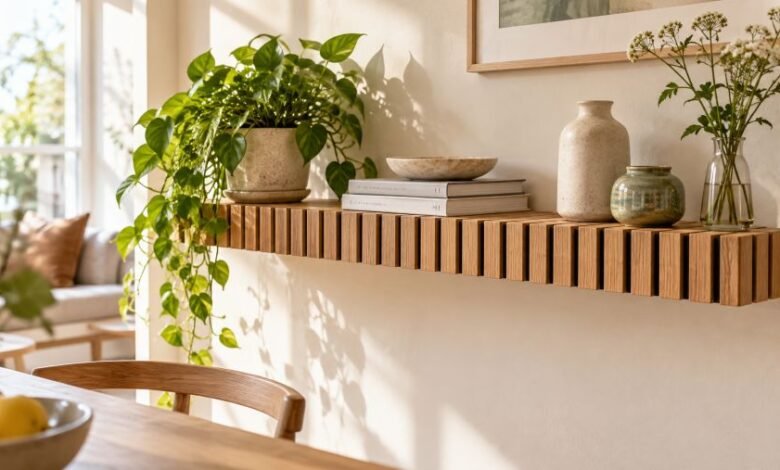
For example, Danish furniture manufacturer Toka Design produces an oak version with distinctive wooden slats and black spacers.
The result is furniture that looks natural while serving a clear purpose.
It holds your belongings, adds texture to a wall, and doesn’t need much decoration to stand out.
Why Does This Wooden Shelf Suit Scandinavian Interiors?
Scandinavian interiors often favour simplicity, practical furniture, and natural materials.
Think about a room with white walls, soft lighting, wooden floors, and only a few carefully chosen objects.
A rustic wooden shelf fits that setting without looking out of place.
Natural Wood Creates Warmth
Wood offers something that painted plastic or polished metal cannot fully reproduce.
Every grain is different.
Some boards have darker lines, small knots, or changes in colour. Reclaimed pieces may also carry marks from their previous use.
These details can make an ordinary shelf feel more personal.
Practical Storage Without Heavy Furniture
Not every room has enough space for a large cabinet.
A wall shelf provides useful storage without occupying valuable floor area.
It can hold books, small plants, photographs, kitchen jars, or everyday accessories.
That makes it particularly useful for smaller homes.
A Design That Works With Different Interiors
You don’t need a fully Scandinavian home to use this shelving style.
Natural wood can sit comfortably beside black metal, cream walls, concrete, brick, or colourful furniture.
The finish and mounting brackets often make the biggest difference.
Different Types of Wooden Shelf Designs
Not every product sold under this name looks identical. Material, construction, and finish can vary.
Slatted Wooden Shelves
These feature several parallel wooden strips, sometimes with small spaces between them.
The open construction gives the shelf a distinctive appearance.
Such designs work particularly well in minimalist rooms.
Reclaimed Wood Shelves
Reclaimed versions use wood that has previously served another purpose.
Scratches, colour variations, and older grain patterns may remain visible.
For people who appreciate rustic furniture, these details can be an attractive part of the design.
Modern Oak Shelves
Modern versions can use carefully finished oak with a smoother surface.
Some have dark spacers, metal supports, or hidden mounting hardware.
They suit homes where natural materials are preferred but a cleaner appearance is wanted.
Where Can You Use It in Your Home?
One reason people like simple wooden shelving is its flexibility.
The same basic material can serve several purposes, depending on the shelf’s size, mounting, and finish.
Living Room
The living room is one of the easiest places to introduce a natural wooden shelf.
Install one above a small cabinet or beside a reading corner.
Add a few books, a framed photograph, and one small plant.
You don’t need to fill every inch. Leaving some empty space makes the display feel calmer.
Kitchen
Open shelving can make a kitchen feel welcoming.
A wooden shelf can hold spice jars, coffee mugs, small bowls, or cookbooks.
It also creates an attractive contrast against ceramic tiles and smooth countertops.
However, kitchens contain steam, grease, and changing temperatures. Choose an appropriate wood finish and avoid positioning untreated timber close to water or intense heat.
Bedroom
A small shelf beside the bed can be a practical alternative to a large bedside unit.
It might hold a book, a clock, or a decorative object.
Light-coloured wood looks comfortable alongside neutral bedding and soft lighting.
The shelf must be properly installed, particularly when positioned above a bed.
Bathroom
Wood can bring warmth to bathrooms containing mostly tile, glass, and metal.
A shelf can provide space for rolled hand towels or closed storage containers.
Not every wooden shelf is appropriate for damp environments, though.
Choose a moisture-suitable finish and ensure the bathroom has adequate ventilation.
Home Office
A well-placed wooden shelf can make a small workspace more organised.
Use it for books, stationery, documents, or a few decorative items.
Keeping frequently needed objects within reach can also free space on your desk.
How to Choose the Right Wooden Shelf
Buying a wooden shelf shouldn’t be based on appearance alone.
A beautiful design is useful only when it fits your space and safely supports the items you intend to place on it.
Measure the Available Space
Start by measuring the wall.
Check both the available width and the shelf depth.
A product that looks perfect in a photograph may project too far into a narrow hallway.
Check the Wood Quality
Look closely at the material.
Check for major cracks, loose joints, splinters, or other signs of damage.
If purchasing reclaimed wood, ask the seller about its previous use and any treatments that may have been applied.
Consider the Finish
Wooden shelves may be sold unfinished, oiled, painted, or lacquered.
An unfinished appearance can be attractive, but the surface may require additional protection.
Choose a coating suited to the room and intended use.
Examine the Mounting System
The mounting hardware matters as much as the shelf itself.
Plasterboard, brick, and concrete walls may need different fixings.
A heavy solid-wood shelf filled with books requires suitable anchors and a wall capable of supporting the combined weight.
Always follow the manufacturer’s instructions.
Can You Make a Wooden Shelf Yourself?
Yes. A simple wooden shelf can be a manageable DIY project for someone comfortable with basic woodworking.
You will need suitable timber, measuring tools, sandpaper, a wood finish, mounting brackets, and appropriate wall fixings.
The process usually involves:
- Choosing sound, dry timber.
- Measuring and cutting the wood to size.
- Sanding rough edges and surfaces.
- Applying a suitable protective finish.
- Checking the wall before drilling.
- Installing correctly rated brackets and fixings.
- Securing the shelf and checking its stability.
Always check for concealed electrical cables or plumbing before drilling.
For heavy shelving or uncertain wall construction, professional installation is the safer option.
Is Reclaimed Wood a Sustainable Choice?
Reusing timber can reduce demand for newly manufactured materials and keep usable wood in service for longer.
That is one reason reclaimed-wood furniture appeals to environmentally conscious buyers.
However, not every rustic wooden shelf is made from reclaimed material.
Some products use new timber that has been finished to resemble older wood.
Their environmental impact also depends on sourcing, processing, transportation, chemical treatments, and durability.
If sustainability matters to you, ask the seller where the wood comes from and whether it has been reused or responsibly sourced.
How to Decorate a Wooden Shelf Beautifully
Good shelf styling doesn’t require expensive objects.
In fact, everyday things often work better.
Start with a few books, a small plant, or a ceramic vase.
Combine objects of different heights, but avoid filling every available space.
A taller item near one side can be balanced with smaller pieces nearby.
Neutral colours often work well with natural timber, especially in Scandinavian interiors.
And don’t forget the wood itself.
If the grain is attractive, leave part of the shelf visible.
The material should be part of the decoration.
Common Mistakes to Avoid
Overloading the Shelf
Solid wood may feel strong, but the brackets and wall anchors have limits.
Always respect the manufacturer’s stated weight capacity.
Ignoring Moisture
Wood can expand and contract as humidity changes.
Using an unsuitable finish may leave the material vulnerable to damage.
Choosing the Wrong Size
A shelf that is too deep can interfere with movement through a room.
Measure carefully before purchasing.
Adding Too Many Decorations
A crowded display can hide the natural appearance that made the shelf attractive.
Choose fewer items and give them room.
Buying Without Checking Construction
A low price isn’t automatically a good deal.
Check how the wooden pieces are joined, whether the finish is suitable, and whether the mounting hardware is supplied.
How Does Wooden Shelving Compare With Other Materials?
| Feature | Wood | Metal | Glass |
|---|---|---|---|
| Appearance | Warm and natural | Modern or industrial | Light and elegant |
| Surface texture | Visible grain | Usually smooth | Smooth |
| Moisture resistance | Depends on finish | Depends on coating | Generally water-resistant |
| Maintenance | Wood-specific care | Cleaning and rust prevention | Regular cleaning |
| Best uses | Home storage and displays | Utility and decorative shelving | Decorative displays |
Each material has its strengths.
Wood is appealing where warmth and natural texture matter. Metal can be useful for certain utility applications, while glass may suit smaller decorative arrangements.
Is This Type of Shelf Worth Buying?
For someone who enjoys natural materials and simple interiors, this style of shelf can be a useful addition.
It provides storage while offering an appearance that differs from many conventional furniture designs.
However, quality matters.
A well-made shelf with appropriate finishing and reliable mounting hardware is generally a better purchase than one chosen only for its rustic appearance.
Think about where you want to install it, what you intend to store, and how much maintenance you’re comfortable doing.
Those details should guide your choice.
Final Thought
Trallehylde shows how an ordinary piece of wooden furniture can be both practical and visually appealing.
Its charm comes from a simple idea: natural materials don’t need to be perfect to look beautiful.
Whether you choose a slatted oak design or a shelf made from reused timber, the right piece can add warmth, texture, and useful storage to your home.
It doesn’t need to dominate the room.
Sometimes, simple works best.
Frequently Asked Questions
1. What does Trallehylde mean in English?
It refers to a wooden shelf associated with Danish tralle construction, often featuring a slatted or rustic appearance.
2. Is it made from real wood?
Many designs use real wood, including oak or reclaimed timber. The exact material depends on the manufacturer.
3. Can it be installed in a kitchen?
Yes. It can hold mugs, jars, and cookbooks when properly mounted and finished for the kitchen environment.
4. Is it suitable for small apartments?
Yes. Wall-mounted shelving can provide storage without using valuable floor space.
5. Can I paint or stain the wood?
Usually, but the preparation depends on the existing finish. Sanding or other surface treatment may be needed.
6. Is this type of shelving expensive?
Prices vary according to dimensions, wood species, construction, and seller. Custom solid-wood products may cost more than basic shelves.
7. Can I use one in a bathroom?
Only when the material, finish, and mounting system are suitable for damp conditions.
8. Which interior styles suit it best?
Scandinavian, minimalist, rustic, farmhouse, and industrial interiors can all work well with natural wooden shelving.