

Kate Tolo: The Entrepreneur Changing the Conversation Around Longevity and Female Health
How Kate Tolo became a recognised voice in the longevity movement by connecting health data, technology, and female biology.

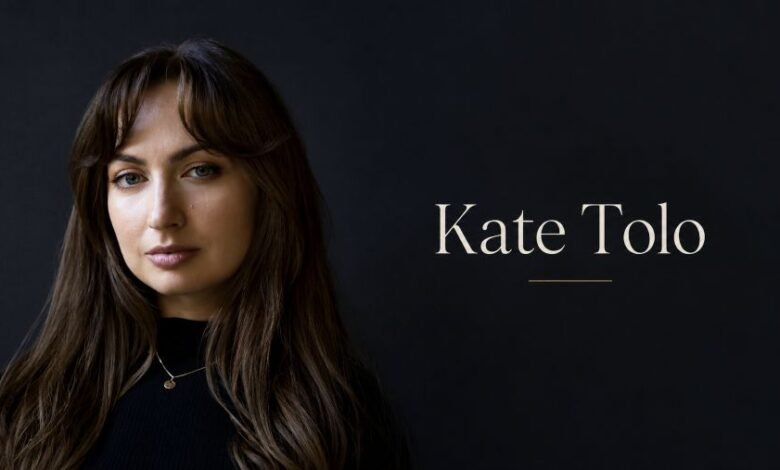
Introduction
The search for a longer, healthier life has moved far beyond traditional medicine. Today, technology, personal health data, and lifestyle experiments are reshaping how people think about ageing. But one part of the conversation has often received less attention: understanding longevity through the lens of female biology.
Kate Tolo has become a recognised name in this emerging space. Known for her connection with Blueprint, the longevity project associated with entrepreneur Bryan Johnson, she represents a different route into the health optimisation industry. Her background is not built around medicine or laboratory research. It comes from design, fashion, business strategy, and communication.
That combination has made her an interesting figure in the modern longevity movement.
Her story is not only about health tracking or anti-ageing ideas. It is also about a bigger question: how can future healthcare become more personalised, especially when many areas of women’s health still need deeper research?
Quick Facts About Kate Tolo
| Category | Details |
|---|---|
| Full Name | Kate Tolo |
| Known For | Longevity entrepreneurship and health optimisation |
| Background | Australian-Bosnian |
| Professional Areas | Design, marketing, health technology |
| Associated Project | Blueprint |
| Known Association | Bryan Johnson |
| Documentary Appearance | Don’t Die: The Man Who Wants to Live Forever |
| Main Focus | Female health data and personalised longevity |
A Different Beginning: From Design to Health Innovation
Kate Tolo’s professional journey did not begin in the medical world.
Before becoming associated with longevity, she worked in creative industries, including fashion and design. Her earlier career involved understanding consumers, building products, and creating experiences that connect with people.
At first glance, fashion and longevity seem unrelated.
They are not.
Both industries involve studying human needs. One focuses on how people present themselves externally. The other focuses on understanding what happens inside the body.
This ability to combine creativity with strategy later became valuable in health technology, where complex scientific ideas often need clear communication before they can reach a wider audience.
How Kate Tolo Entered the Longevity Movement
Kate Tolo became publicly recognised through her involvement with Bryan Johnson’s longevity initiatives.
Before Blueprint became a global topic, she worked with Kernel, a company founded by Johnson that focused on brain-computer interface technology. Her connection with Johnson’s projects eventually introduced her to the world of extreme health optimisation.
Blueprint gained attention because it treated health as something measurable.
Instead of simply following general wellness advice, the project focused on collecting detailed personal health information and using that data to guide decisions.
The approach attracted curiosity around the world.
Some people saw it as a glimpse into the future of personalised healthcare. Others questioned whether individual experiments could provide enough evidence to support wider medical conclusions.
Both views remain part of the conversation.
What Makes Blueprint Different From Traditional Wellness?
Traditional healthcare often focuses on diagnosing and treating problems after they appear.
Blueprint represents a different philosophy.
The idea is based around continuous measurement and adjustment. This includes tracking areas such as:
- Blood biomarkers
- Sleep patterns
- Exercise habits
- Nutrition
- Body composition
- Lifestyle factors
The goal is not simply reacting to illness. It is understanding changes before they become major problems.
However, measurement alone does not equal proof.
A biological marker can show that something has changed, but scientists still need long-term research to understand whether those changes actually improve lifespan or health outcomes.
This difference is one of the biggest debates in the longevity industry.
Why Female Health Became a Major Part of Her Work
One of Kate Tolo’s most discussed areas of interest is female health data.
For years, researchers have highlighted gaps in women’s health research. Many studies historically relied heavily on male participants, creating challenges when applying findings to female biology.
Women experience biological processes that require specific consideration, including:
- Hormonal changes
- Menstrual cycle patterns
- Reproductive health
- Menopause-related changes
- Sex-specific health risks
Tolo has spoken about the importance of collecting more detailed information about women’s bodies through personal health tracking.
The idea behind this approach is simple: better data can lead to better understanding.
But there is also a scientific limitation.
Personal tracking can identify patterns. It can raise important questions. Yet it does not replace clinical trials or large-scale research.
The Growing Debate Around Biohacking
Kate Tolo’s work exists inside the wider biohacking movement.
Biohacking generally refers to using technology, data, and lifestyle changes to improve human performance or health.
Supporters believe people can take a more active role in understanding their bodies.
They argue that wearable devices, testing tools, and personalised information allow individuals to make smarter health decisions.
Critics take a more cautious approach.
They argue that some claims in the biohacking world move faster than scientific evidence. A personal improvement does not always prove that a method will work for millions of people.
The distinction matters.
Innovation often begins with experiments. Medicine, however, depends on evidence.
Why Kate Tolo Became a Public Figure
The popularity of longevity culture has helped figures like Kate Tolo gain attention.
People are increasingly interested in:
- Preventative health
- Personalised medicine
- Biological tracking
- Healthy ageing
- Technology-driven wellness
Her association with Bryan Johnson has also increased public curiosity. Some media coverage has described her as a “female Bryan Johnson” because of her involvement in similar longevity discussions.
The comparison is understandable, but incomplete.
Johnson’s public identity is centred around his personal longevity experiment. Tolo’s work has increasingly highlighted another question: how can longevity research better understand women?
That difference gives her role a separate identity.
The Importance of Better Female Health Data
The discussion around Kate Tolo connects with a much larger healthcare challenge.
Medical progress depends on accurate information.
If certain groups are underrepresented in research, healthcare solutions may not work equally well for everyone.
More female-specific data could improve understanding of:
- How diseases develop differently
- How treatments affect women
- How hormones influence health
- How ageing patterns vary
This does not mean every personal health experiment creates medical breakthroughs.
It means these conversations can highlight areas where more scientific attention is needed.
Kate Tolo’s Influence on the Future of Longevity
Kate Tolo represents a new type of health entrepreneur.
She sits between several worlds:
- Technology
- Consumer communication
- Personal health experimentation
- Longevity advocacy
Her influence comes partly from making complex health ideas easier for the public to understand.
The longevity industry itself is still developing. Some areas are supported by strong research, while others remain experimental.
The challenge ahead is clear: turning interesting personal discoveries into reliable knowledge that can benefit society.
Conclusion
Kate Tolo’s journey reflects how the conversation around health and ageing is changing.
She entered longevity from an unusual background, combining design thinking with health innovation. Her work has helped bring attention to female health data and the importance of personalised approaches.
At the same time, longevity science remains a developing field. Personal experiments can inspire new ideas, but strong medical evidence remains essential.
Her most significant contribution may be the questions she has helped raise: how can healthcare understand individuals better, and how can future research include the biological differences that matter most?
Frequently Asked Questions About Kate Tolo
Who is Kate Tolo?
Kate Tolo is a longevity entrepreneur known for her involvement with Blueprint and personalised health optimisation projects.
What is Kate Tolo known for?
She is known for bringing attention to longevity, female health data, and biohacking discussions.
Is Kate Tolo a scientist?
No. She is known primarily as an entrepreneur and health advocate rather than a medical researcher.
What is Blueprint?
Blueprint is a health optimisation project focused on tracking biological data, lifestyle habits, and personal health measurements.
Why is Kate Tolo important in longevity?
She has helped increase awareness about the role of female-specific health data in the future of personalised healthcare.