
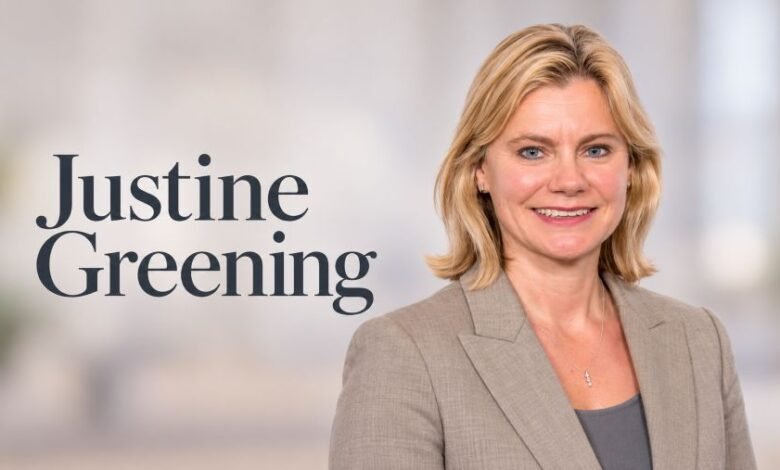
Justine Greening: From UK Cabinet Minister to Social Mobility Leader
The former Education Secretary built her career in finance, spent 14 years in Parliament, and now works with businesses and universities to improve access to opportunity across the UK.

Introduction
Justine Greening is a former British politician, chartered accountant, and social mobility campaigner. She represented Putney in Parliament from 2005 to 2019 and served as the UK’s Education Secretary between July 2016 and January 2018.
Her career has changed direction since then.
Today, she works with employers, universities, and public organisations. Her main focus is social mobility, particularly helping people gain fairer access to education, training, and jobs.
As of October 2026, she is the founder of the Purpose Coalition, Joint Chancellor of the University of Southampton, and a non-executive director of On the Beach Group plc.
She also received ICAEW’s Outstanding Achievement Award in September 2026 for her public service and work on social mobility.
Quick Facts
| Detail | Information |
|---|---|
| Full Name | Justine Greening |
| Date of Birth | 30 April 1969 |
| Age | 57 years (October 2026) |
| Birthplace | Rotherham, South Yorkshire, England |
| Nationality | British |
| Profession | Former politician, chartered accountant, social mobility campaigner |
| Former Political Party | Conservative |
| Parliamentary Constituency | Putney |
| Years as an MP | 2005–2019 |
| Former Cabinet Position | Secretary of State for Education |
| University | University of Southampton |
| Higher Education | MBA, London Business School |
| Professional Qualification | ICAEW Chartered Accountant |
| Current Organisation | Purpose Coalition |
| University Position | Joint Chancellor, University of Southampton |
| Major Recognition | ICAEW Outstanding Achievement Award 2026 |
Growing Up in South Yorkshire
Her story begins in Rotherham.
Born on 30 April 1969, Greening grew up in South Yorkshire and attended a local comprehensive school.
She did not begin her working life in politics. Her early interests and education led her towards business, accounting, and finance.
After finishing school, she studied Business Economics and Accounting at the University of Southampton.
She graduated in 1990 with first-class honours.
That was an important first step.
She later completed an MBA at London Business School, building on the business knowledge she had gained during her university years.
Her education became part of her public story years later.
As Education Secretary, she regularly discussed the importance of giving children from different backgrounds access to better opportunities.
Her own experience of attending a comprehensive school was relevant to those discussions.
A Career in Finance Before Parliament
Politics came later.
Before becoming an MP, Greening spent around 15 years working in business and finance.
She qualified as an ICAEW Chartered Accountant in 1995 while working with Price Waterhouse.
Her professional career also included senior finance responsibilities at GlaxoSmithKline and Centrica.
At Centrica, she worked in a senior finance position connected with sales and marketing.
These roles gave her experience of budgets, financial management, and business decisions.
That background would become relevant when she entered government.
She eventually served as Economic Secretary to the Treasury, a role involving financial and economic policy.
Still, entering Parliament required a different kind of work.
She had to win an election.
Entering British Politics
Her first parliamentary contest came in 2001.
She stood as the Conservative candidate for Ealing, Acton and Shepherd’s Bush but did not win.
Four years later, things changed.
On 5 May 2005, she was elected as the Conservative MP for Putney.
She would represent the constituency for 14 years.
Soon after entering Parliament, she became a Conservative Party vice-chair with responsibility for youth issues.
Her early parliamentary work included membership of the Work and Pensions Committee.
In 2007, she became a Shadow Treasury Minister.
By January 2009, she had moved into a shadow ministerial role covering communities and local government.
Her political responsibilities were growing.
Then the 2010 general election brought a change of government.
Her First Government Appointment
David Cameron became Prime Minister in May 2010.
Greening entered government as Economic Secretary to the Treasury on 13 May 2010.
The position involved work within the Treasury during a period when the British government was dealing with difficult public spending and economic decisions.
She remained in the post until October 2011.
Her next appointment brought a much larger department.
She became Secretary of State for Transport on 14 October 2011.
The department was responsible for national transport policy, including roads, railways, aviation, and other transport matters.
Her time in the position lasted until September 2012.
Then another Cabinet role followed.
Leading International Development
In September 2012, she became Secretary of State for International Development.
She held the position until July 2016.
This placed her in charge of a government department responsible for international development and overseas aid.
The work involved global poverty, international assistance, and cooperation with other countries and organisations.
One major issue during her time in the department was the Ebola outbreak in West Africa.
The UK government supported international efforts to respond to the health emergency.
Her department also contributed to work surrounding the United Nations Sustainable Development Goals.
Those goals were adopted internationally in 2015.
The development role gave Greening experience in international public policy before she returned to a department focused mainly on domestic issues.
That change came in 2016.
Becoming the UK’s Education Secretary
In July 2016, Theresa May became Prime Minister.
Greening was appointed Secretary of State for Education on 14 July 2016.
She also became Minister for Women and Equalities.
Her appointment attracted attention partly because she had attended a comprehensive school rather than a selective or fee-paying school.
Education policy was now her main responsibility.
During her time in the department, she focused heavily on social mobility.
The idea is fairly simple.
A person’s family background, income, or hometown should not unfairly restrict their access to education and employment.
She supported work intended to improve educational opportunities for disadvantaged young people.
In December 2017, the Department for Education published a social mobility action plan.
The plan addressed educational opportunity and the barriers faced by young people in different parts of England.
Her time as Education Secretary ended on 8 January 2018.
But her interest in social mobility continued outside the Cabinet.
Why She Left Parliament
Her final years in Parliament came during a difficult period for the Conservative Party.
Brexit created major disagreements between MPs and the government.
Greening was among the Conservative politicians who opposed Boris Johnson’s government’s approach during a parliamentary confrontation in September 2019.
She lost the Conservative whip after voting against the government in that dispute.
According to official parliamentary records, she became an Independent MP on 4 September 2019.
She had already announced that she would not stand at the next general election.
Her parliamentary service ended on 6 November 2019, when Parliament was dissolved ahead of the December election.
After 14 years as an MP, her career entered another stage.
She returned to working more directly with businesses and educational organisations.
Building a New Career Outside Politics
Leaving Parliament did not end her public work.
Instead, Greening concentrated on social mobility and the role employers can play in improving access to opportunity.
She had co-founded the Social Mobility Pledge in 2018 with entrepreneur David Harrison.
The initiative encourages employers and educational institutions to widen opportunities through measures such as work experience, employment access, and career progression.
According to ICAEW’s September 2026 announcement, more than 800 organisations had adopted the pledge.
That is a substantial number of participating organisations.
But participation and results are different things. The pledge provides commitments and a framework, while the effects of individual organisations’ work need to be measured separately.
She also established the Purpose Coalition.
This organisation works with businesses, universities, NHS bodies, local authorities, and other groups.
Its stated aim is to help organisations address barriers that can prevent people from getting ahead in life.
The work reflects a subject she had discussed throughout her time in education policy.
What Does She Do in 2026?
Her current professional work goes well beyond her former political positions.
As confirmed by ICAEW in September 2026, she holds several public and business roles.
Purpose Coalition
She is the organisation’s founder and chair.
The group brings together people from business, education, government, and public services to work on social mobility.
Its activities include reports, discussions, and projects concerning regional opportunity and access to careers.
University of Southampton
She serves as Joint Chancellor of the university where she completed her undergraduate degree.
The chancellor’s role is different from the university’s day-to-day executive management.
It carries ceremonial and representative responsibilities.
Sutton Trust
She chairs the Sutton Trust Education Advisory Panel, also described in official material as its Education Advisory Board.
The Sutton Trust works on educational inequality and social mobility.
Her advisory role is connected to those subjects.
On the Beach Group
She is a non-executive director of On the Beach Group plc.
She also chairs its Remuneration Committee.
A non-executive director contributes to board oversight rather than managing the company’s daily operations.
These positions show how her work has moved from ministerial responsibility into education, business governance, and public policy discussions.
A Major Award in September 2026
A recent career milestone arrived on 15 September 2026.
Greening received the Outstanding Achievement Award from the Institute of Chartered Accountants in England and Wales (ICAEW).
The award was presented at ICAEW’s Annual Dinner.
The institute recognised her contributions to public service and her work on social mobility.
The award also connected her present activities with her earlier profession.
She had qualified as an accountant in 1995.
More than three decades later, the same professional body was recognising the wider work she had carried out in government and beyond.
ICAEW announced the award publicly on 16 September 2026.
It remains one of the clearest recent milestones in her professional career.
Her Work on Equal Opportunities
Social mobility is a recurring subject in Greening’s career.
She has talked about it as a government minister and continued working on it after leaving Parliament.
Her public work centres on the idea that people should have meaningful opportunities regardless of the circumstances in which they grew up.
That can involve practical issues.
Students may need access to work experience.
Young adults may need clearer ways into professional careers.
People living in areas with fewer local employers may face different challenges from those living in major business centres.
The Purpose Coalition works with organisations on these kinds of issues.
Greening has also discussed how technological changes, including artificial intelligence, could affect skills and early-career opportunities.
Her position is that employers and educational institutions have responsibilities in helping people prepare for changes in the labour market.
These are policy positions and organisational goals. Their practical effects depend on the work carried out by participating organisations.
Recognition and Professional Achievements
Her professional record covers several different fields.
She spent 14 years representing Putney in the House of Commons.
During that period, she held three Cabinet Secretary of State positions: Transport, International Development, and Education.
She also served as Economic Secretary to the Treasury and Minister for Women and Equalities.
Outside politics, she has continued her work in the fields of business, education, and social mobility.
Her professional qualifications include first-class honours in Business Economics and Accounting, an MBA, and chartered accountant status.
Her September 2026 ICAEW award added another documented achievement to that record.
It also drew attention to her career before Parliament, which is sometimes overlooked in discussions of her ministerial work.
Final Thought
Justine Greening’s career has taken several turns.
She started in finance, entered Parliament in 2005, and later led three government departments.
Her work today looks different.
Rather than serving as an elected politician, she works with organisations involved in education, employment, and business.
Her September 2026 award shows that this later part of her career continues to receive professional recognition.
From Rotherham to the Cabinet, and then into university and business leadership, her career has remained closely connected to questions about opportunity and public service.
Frequently Asked Questions
1. Who is Justine Greening?
Justine Greening is a former British Conservative politician, chartered accountant, and social mobility campaigner. She served as UK Education Secretary from 2016 to 2018.
2. How old is she?
She was born on 30 April 1969 and is 57 years old as of October 2026.
3. Where was she born?
She was born in Rotherham, South Yorkshire, England.
4. Which university did she attend?
She studied at the University of Southampton and later completed an MBA at London Business School.
5. Was she a Conservative MP?
Yes. She represented Putney as a Conservative MP from 2005 until September 2019, when she became an Independent. She left Parliament in November 2019.
6. Why is she famous?
She is known for serving as UK Education Secretary and holding Cabinet roles in Transport and International Development.
7. What does she do now?
As of October 2026, she leads the Purpose Coalition and holds positions with the University of Southampton, the Sutton Trust, and On the Beach Group.
8. What award did she receive in 2026?
She received ICAEW’s Outstanding Achievement Award on 15 September 2026 for her contributions to public service and social mobility.