
David Hepworth: The Editor Who Helped Shape UK Music Media
From Smash Hits and Q to Live Aid, bestselling music books, and Word In Your Ear, David Hepworth has spent decades documenting how popular music works.

Introduction
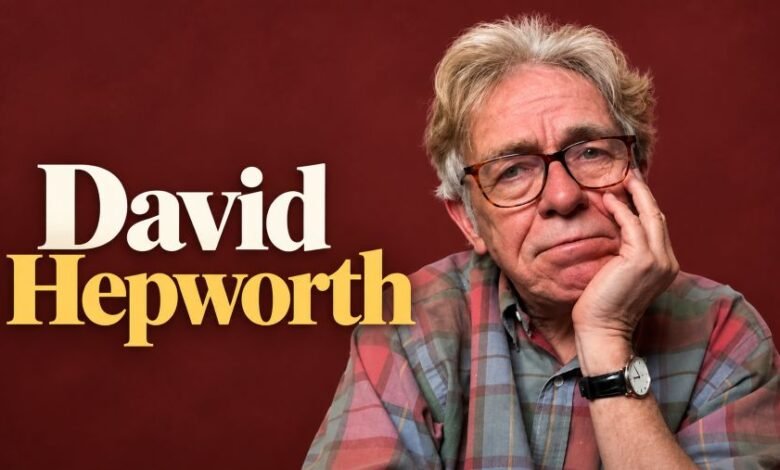
David Hepworth is a British music journalist, editor, broadcaster, author, and podcaster. He is best known for his work with major UK magazines including Smash Hits, Q, Mojo, Empire, and The Word.
His career goes much wider than print.
He presented The Old Grey Whistle Test, appeared as one of the BBC anchors during Live Aid in 1985, and later built a strong career writing books about rock music, records, musicians, and the business around them.
He is still working.
As of September 2026, Hepworth continues to co-present the long-running Word In Your Ear podcast with Mark Ellen. His recent publishing work includes Hope I Get Old Before I Die: Why Rock Stars Never Retire.
Quick Facts
| Fact | Verified Detail |
|---|---|
| Full name | David Hepworth |
| Born | 1950 |
| Birth region | Yorkshire, England |
| Nationality | British |
| Profession | Music journalist, editor, broadcaster, author, podcaster |
| Known for | Smash Hits, Q, Mojo, The Word, BBC music broadcasting |
| Major TV connection | The Old Grey Whistle Test |
| Live Aid role | BBC presenter/anchor during the 1985 broadcast |
| Current work | Author and co-presenter of Word In Your Ear |
| Podcast | Word In Your Ear |
| Major award | PPA Editor of the Year, 1985 |
| Current base | London, according to his publisher |
Who Is David Hepworth?
David Hepworth has worked around British popular music for more than five decades.
At first, records were the job.
Then journalism took over.
His career moved through record retail, weekly music journalism, magazine editing, television, publishing, books, and podcasting. That range helps explain why his name appears across so many parts of British music culture.
Readers may know him for different reasons.
Some remember Smash Hits. Others know Q or Mojo. Older television viewers may remember him from BBC music programming.
A newer audience knows his books.
And many listeners now hear him talking about music each week through Word In Your Ear.
Early Life and Education
Hepworth was born in Yorkshire in 1950.
Public interviews connect his early years with Dewsbury and Wakefield. Music caught his attention early, especially during the huge changes taking place in British and American pop during the 1960s.
In one interview, he recalled being a schoolboy in Wakefield when The Beatles released Sgt. Pepper’s Lonely Hearts Club Band in 1967.
That period clearly stayed with him.
It later became the kind of music history he would spend years writing and talking about.
By 1968, Hepworth was studying drama at Trent Park College. He has spoken publicly about taking part in college stage work where music and lighting were used together.
It was still early.
But the connection was there.
Working at HMV Before Journalism
Before his magazine career started, Hepworth worked close to the music business in a much more direct way.
He joined HMV’s Bond Street store in 1973.
He stayed there for about three years.
That meant spending his working day around records, customers, releases, and the changing tastes of British music buyers.
He later had a short period connected with Beserkley Records during the late 1970s.
Then journalism became the main path.
Starting a Career in Music Journalism
Hepworth wrote for established British music publications such as NME and Sounds during the early part of his journalism career.
These magazines were major names in UK music coverage.
But one title would become closely linked with him.
That was Smash Hits.
He joined the magazine in 1979, shortly after its launch.
An archived 1980 issue lists Hepworth as Features Editor. By 1981, magazine mastheads show him as Editor.
That was a fast move.
And Smash Hits was growing quickly.
The magazine mixed pop interviews, lyrics, humour, photography, and news in a format aimed at young music fans.
Hepworth became part of the editorial team during one of its best-known periods.
Just Seventeen and a Major Publishing Award
Hepworth later worked on the launch of Just Seventeen in 1983.
The magazine targeted teenage readers and became another major title in British publishing.
His work there brought formal industry recognition.
In 1985, the Professional Publishers Association named David Hepworth Editor of the Year for Just Seventeen.
That award is confirmed in the PPA’s own historical records.
His publishers also credit him with later receiving PPA Writer of the Year and the Mark Boxer Award from the British Society of Magazine Editors.
David Hepworth and The Old Grey Whistle Test
Print was only part of the story.
Hepworth also moved into television.
He became a presenter of the BBC music programme The Old Grey Whistle Test.
The programme had a strong reputation for serious music coverage and live performances. Appearing on it placed Hepworth in front of an audience that may never have read the magazines he edited.
Then came an even bigger television moment.
His Role at Live Aid
On 13 July 1985, musicians from around the world took part in Live Aid.
The concerts were held mainly at Wembley Stadium in London and John F. Kennedy Stadium in Philadelphia, with the event broadcast internationally.
Hepworth was among the presenters working on the BBC’s Live Aid coverage.
It remains one of his most recognisable television credits.
The event became one of the defining music broadcasts of the 1980s, and his involvement connected his journalism and broadcasting work with a historic day in live music television.
Working on Q Magazine
Hepworth later became involved in the launch and editing of Q.
The magazine launched in 1986.
It took a different approach from youth-focused pop titles, giving more space to established artists, albums, interviews, reviews, and long-form music writing.
Hepworth’s publisher specifically credits him with involvement in launching and editing the title.
That wording matters.
He worked with teams.
So it is more accurate to describe him as a key figure involved in these magazines rather than claiming he created every title alone.
Empire and Mojo
His publishing work kept growing.
Hepworth also worked on the launch of Empire, the film magazine founded in 1989.
Then came Mojo.
Penguin’s author material lists him among the people involved in launching and editing the music magazine.
By this stage, his career was no longer tied to one type of publication.
Pop.
Rock.
Film.
Youth magazines.
Music criticism.
He had worked across all of them.
Development Hell and The Word
Hepworth later became one of the founding partners of Development Hell, an independent publishing company created with figures including Mark Ellen, Jerry Perkins, and Andrew Harrison.
One of its best-known projects was The Word.
The magazine launched in 2003.
Hepworth served as its editorial director.
The Word focused heavily on music but also covered books, films, media, and popular culture.
It ran for nine years.
The magazine closed in 2012 after changes in both publishing and the music business made its model harder to sustain.
But part of the project survived.
In fact, it kept growing.
Word In Your Ear
The podcast Word In Your Ear began in 2007.
David Hepworth presents it with fellow music journalist and editor Mark Ellen.
The pair talk about records, artists, concerts, books, music history, and stories from their years inside the industry.
It remains active.
As of September 2026, new episodes were still being released, with Hepworth continuing as a presenter.
That makes the podcast one of the clearest examples of how his career moved from print into newer forms of music media.
David Hepworth’s Books
Writing books became a major part of Hepworth’s later career.
His work often looks at music history through particular years, formats, people, or industry changes.
1971: Never a Dull Moment
Published in 2016, 1971: Never a Dull Moment argues that 1971 was an extraordinary year for rock music.
The book later became the basis for the Apple documentary series 1971: The Year That Music Changed Everything.
That gave the book a second life on screen.
Uncommon People
Uncommon People: The Rise and Fall of the Rock Stars 1955–1994 followed.
The book looks at the idea of the rock star through a series of defining moments and personalities.
Nothing Is Real
Hepworth later published Nothing Is Real: The Beatles Were Underrated and Other Sweeping Statements About Pop.
The book collects arguments and observations about popular music.
The title gives away the tone.
Direct. Opinionated. Music-heavy.
A Fabulous Creation
A Fabulous Creation: How the LP Saved Our Lives focuses on the long-playing record and the period when the album became one of popular music’s main formats.
Hepworth knew that world first-hand.
He had sold records.
He had reviewed them.
Then he spent years writing about the people who made them.
The Rock & Roll A Level
The Rock & Roll A Level continued his music writing, testing readers’ knowledge while looking back through decades of pop and rock history.
Overpaid, Oversexed and Over There
In Overpaid, Oversexed and Over There, Hepworth wrote about British musicians and their relationship with America.
It covers a period when UK acts increasingly wanted to break into the huge US music market.
Abbey Road
One of his most notable recent books is Abbey Road: The Inside Story of the World’s Most Famous Recording Studio.
The book was first published in Britain in 2022.
It includes a foreword by Paul McCartney.
The subject fits Hepworth well: records, musicians, studios, technology, business decisions, and the stories behind famous recordings.
Hope I Get Old Before I Die
Hepworth’s later book Hope I Get Old Before I Die: Why Rock Stars Never Retire looks at what happens when the rebellious young stars of rock music grow older.
Its UK digital and audio editions appeared in 2024, while the paperback was published in May 2026.
The book asks a simple question.
Why keep going?
For many rock musicians, retirement never arrives in the normal sense.
What Is David Hepworth Doing Now?
As of September 2026, Hepworth remains active in music media.
He continues to co-host Word In Your Ear with Mark Ellen.
He also continues working as an author and commentator on popular music.
Recent publisher material describes him as still writing, broadcasting, podcasting, and appearing at events.
Radio Times also identified him as a columnist in 2025.
So, no, his career has not quietly stopped.
The format simply changed.
Magazines once came first.
Now books and podcasts take much more of the space.
Personal Life
Hepworth’s publisher says he lives in London.
He has also publicly referred to having children in past interviews.
Beyond those confirmed details, there is little reason to turn his private life into guesswork.
His public story is mainly professional.
And there is plenty there already.
Awards and Recognition
One of Hepworth’s clearest documented awards came in 1985, when the PPA named him Editor of the Year for Just Seventeen.
His publisher also lists:
- PPA Writer of the Year
- British Society of Magazine Editors’ Mark Boxer Award
His connection with British publishing remains active.
At the 2025 PPA Awards, Hepworth appeared onstage to pay tribute to former PPA chief executive Barry McIlheney.
Interesting Facts About David Hepworth
He worked in an HMV store before becoming a major music editor.
Hepworth started at HMV’s Bond Street branch in 1973.
Archived magazines confirm his rise at Smash Hits.
A 1980 masthead names him Features Editor. A 1981 issue lists him as Editor.
He covered Live Aid for the BBC.
His television career placed him inside one of the biggest music broadcasts ever staged.
Word In Your Ear started before The Word closed.
The podcast began in 2007, while the magazine continued until 2012.
Paul McCartney wrote the foreword to his Abbey Road book.
The connection makes sense given the studio’s long history with The Beatles.
His 1971 book reached television.
It became the basis for Apple’s documentary series 1971: The Year That Music Changed Everything.
Why David Hepworth Remains Relevant
David Hepworth has watched popular music change from several angles.
First as a buyer and seller of records.
Then as a journalist.
Then editor.
Broadcaster.
Publisher.
Author.
Podcaster.
The medium changed many times.
The subject stayed familiar.
Music.
His career also offers a useful record of how British music journalism changed. Weekly magazines lost power. Monthly titles grew. Print advertising fell. Podcasts arrived. Streaming changed how people discover records.
Hepworth kept writing through each change.
And he is still talking about music now.
Final Thought
David Hepworth’s career stretches from the record-shop counters of 1970s London to podcasts released in 2026.
That is a long run.
But the pattern is simple.
He found stories in music, wrote them down, talked about them on air, helped make magazines around them, and later turned years of experience into books.
For readers searching his name today, that is the main point: David Hepworth is one of the long-running figures in British music journalism and publishing, and he remains professionally active through writing and Word In Your Ear.
Frequently Asked Questions
Who is David Hepworth?
David Hepworth is a British music journalist, editor, broadcaster, author, and podcaster known for his work with titles including Smash Hits, Q, Mojo, Empire, and The Word.
When was David Hepworth born?
He was born in 1950 in Yorkshire, England. Reliable sources used for this article do not establish an exact day and month strongly enough to include one.
Was David Hepworth the editor of Smash Hits?
Yes. Archived issues show him as Features Editor in 1980 and Editor by 1981.
Did David Hepworth present Live Aid?
He was one of the presenters involved in the BBC’s coverage of Live Aid in 1985.
What podcast does David Hepworth host?
He co-presents Word In Your Ear with Mark Ellen. The podcast began in 2007 and remained active in September 2026.
What books has David Hepworth written?
His books include 1971: Never a Dull Moment, Uncommon People, Nothing Is Real, A Fabulous Creation, The Rock & Roll A Level, Overpaid, Oversexed and Over There, Abbey Road, and Hope I Get Old Before I Die.
Is David Hepworth still working?
Yes. As of September 2026, he remains active as a writer and co-presenter of Word In Your Ear.
Where does David Hepworth live?
His current Penguin author information states that he lives in London.