
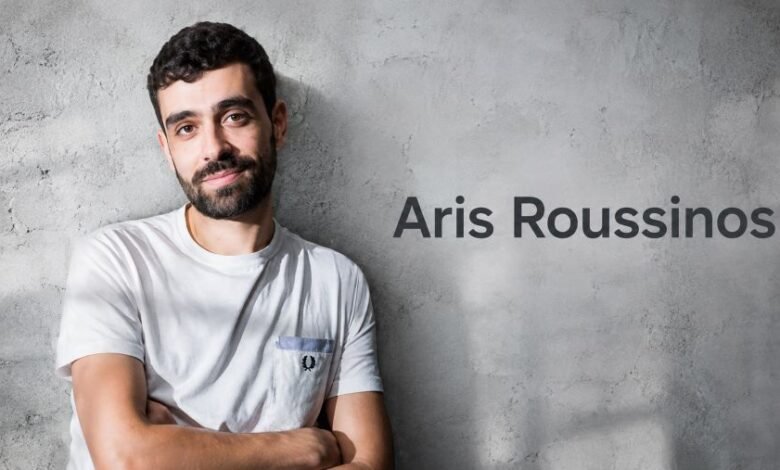
Aris Roussinos: UnHerd Columnist, War Reporter and Author
From frontline reporting in Mali and Syria to political analysis at UnHerd, Aris Roussinos has built a career around war, nationalism, conflict and the politics behind them.

Introduction
Aris Roussinos is a British journalist, author and former war reporter who currently writes as a columnist for UnHerd. He became widely known through his frontline work for VICE and VICE News, reporting from conflicts and political upheavals across Africa, Europe and the Middle East. As of September 2026, UnHerd still lists him as a columnist and former war reporter.
His career changed fast.
Roussinos went from self-funded conflict reporting to award-winning journalism, then spent years covering wars for VICE. Later, his work moved toward long-form political analysis. Today, readers are more likely to find his name attached to essays about Britain, nationalism, war, Europe and international politics.
Aris Roussinos Quick Facts
| Quick Fact | Details |
|---|---|
| Full Name | Aris Roussinos |
| Profession | Journalist, columnist and author |
| Nationality | British |
| Current Role | UnHerd columnist |
| Known For | Conflict reporting and political commentary |
| Former Major Outlet | VICE / VICE News |
| Major Award | Rory Peck Award for News, 2013 |
| Award-Winning Work | Ground Zero Mali: The Battle of Gao |
| Book | Rebels: My Life Behind Enemy Lines with Warlords, Fanatics and Not-so-Friendly Fire |
| Education Field | Anthropology |
| Universities Reported | Durham and Oxford |
| Main Writing Areas | War, nationalism, Britain, Europe and geopolitics |
Who Is Aris Roussinos?
Aris Roussinos is best described as a journalist who moved from battlefields into political commentary.
That sounds simple. It wasn’t.
His early reputation came from being physically close to major conflicts. He filmed fighting, travelled with armed groups and reported from areas where normal access was limited. Penguin’s official author material credits him with coverage of the Tunisian and Bahraini revolutions, the Japanese tsunami and nuclear crisis, Libya, Egypt, Syria, Sudan and other major stories.
Later, his career changed direction.
He continued writing about conflict, but the frame grew wider. His UnHerd work now covers British politics, national identity, European affairs, war and foreign policy. His official UnHerd archive remained active through August 2026.
So, basically, there are two clear phases to his public career: frontline reporting and political writing.
Early Life and Education
Roussinos grew up in St Albans, Hertfordshire, according to a detailed 2014 interview with the Evening Standard. The paper reported that his father was Greek and his mother was Irish and worked at the BBC.
His education later fitted his career remarkably well.
The same interview reported that he attended Haberdashers’ Aske’s Boys’ School before studying anthropology at Durham and Oxford.
Anthropology became useful in practice.
A lot of his later reporting dealt with armed groups, ethnic identity, nationalism, tribal politics, political order and social conflict. Those themes also appear repeatedly in his later essays.
He had also considered a military route. The Evening Standard reported that he had intended to attend Sandhurst before a knee injury changed those plans.
Journalism came next.
How Aris Roussinos Became a War Reporter
Roussinos was already reporting from conflict zones before his VICE years became widely known.
In a later account of his career, he wrote that he arrived at VICE with experience covering the Libyan war, the Tunisian revolution and rebels in Sudan. He described himself at the time as a young reporter still early in his career.
VICE gave him room to keep going.
And he went far.
His reporting included Mali, Syria, Iraq and other conflict areas. He worked in video as well as written journalism, which helped make his reporting style immediately recognisable.
The camera mattered.
So did proximity.
Rather than simply writing about wars from outside them, Roussinos often worked close to the people fighting them. This approach became a major part of the work that made his name.
The Battle of Gao and Rory Peck Award
The biggest early career marker came in 2013.
Roussinos travelled to Gao, Mali, and filmed fighting between Malian government forces and Islamist insurgents. VICE published the work as part of Ground Zero: Mali. Its own archive dates the filming in Gao to February 21, 2013.
The trip was self-funded.
That detail matters.
The Guardian reported that Roussinos won the 2013 Rory Peck Award for News for Ground Zero Mali: The Battle of Gao. The award recognised his footage of the fighting in the city.
That put his name firmly on the map.
The Frontline Club also described him during this period as a journalist, filmmaker and VICE staff reporter who had covered Libya, Bahrain, Tunisia, Greece, Sudan, Egypt, Syria and Mali.
Work at VICE and VICE News
Roussinos became closely linked with the rise of VICE’s international news operation during the 2010s.
By 2014, the Frontline Club described him as a producer and host at VICE News.
His assignments kept getting tougher.
He covered the Syrian war repeatedly. He also followed the rise and territorial defeat of ISIS, something he later discussed in his own writing about his years at VICE.
Actually, his later account gives a useful view of how that newsroom worked.
Roussinos wrote that VICE allowed younger reporters to cover stories that older television networks might reserve for veteran correspondents. He also argued that VICE helped change how television news looked by using smaller cameras, a less formal presentation style and close-range reporting.
He worked there for years.
The experience clearly stayed with him.
Aris Roussinos and the Book Rebels
Roussinos turned his experiences into a book.
Rebels: My Life Behind Enemy Lines with Warlords, Fanatics and Not-so-Friendly Fire was published as an ebook in July 2014, followed by a paperback edition in January 2015. Penguin lists the paperback at 320 pages.
The book draws on his time embedded with rebel groups.
War is seen close-up.
Penguin describes the work as an eyewitness account built from years spent alongside armed groups in conflict zones.
For readers trying to understand Roussinos beyond his newspaper columns, Rebels is probably the clearest starting point. It comes from the period when frontline reporting sat at the centre of his working life.
His Move From War Reporting to Political Writing
Careers rarely move in straight lines.
Roussinos is a good example.
He eventually moved away from full-time battlefield reporting and became increasingly known for political essays. UnHerd now describes him directly as a columnist and former war reporter.
That description is important.
He hasn’t simply changed employers. His subject matter has widened too.
His recent work covers British politics, nationalism, European politics, war, immigration, identity and international relations. Articles listed by UnHerd during 2026 included pieces about Britain, Albania, Belfast, Hungary and Syria.
The old reporting background still shows.
His political writing often looks at power through history, conflict, group identity and the state rather than only daily party politics.
What Does Aris Roussinos Do Now?
As of September 2026, Aris Roussinos is an UnHerd columnist.
That is the clearest current description.
UnHerd’s official author page lists recent articles through August 2026, including Britain’s common-sense crisis, Inside the Albanian revolution and Sharpe: relic of a lost Britain.
He still writes about foreign affairs.
But Britain now takes up a lot of space.
His recent archive shows sustained interest in English and British politics, national identity and political change, alongside pieces about Europe and conflict abroad.
So his current public role is different from his VICE years.
Still connected. Just broader.
Journalism Safety and the Frontline Freelance Register
Roussinos was also involved in work concerning freelance journalist safety.
In 2013, the Committee to Protect Journalists reported that Roussinos, Ayman Oghanna and Emma Beals sat on the initial governing committee of the Frontline Freelance Register.
The group was created around problems familiar to freelance conflict reporters: limited institutional backing, safety risks and professional standards.
This wasn’t a side issue.
Roussinos’s early Mali reporting itself had been self-funded, which shows the kind of working conditions freelancers could face before landing wider institutional support.
Why Is Aris Roussinos Known?
For most readers, three things explain his public profile.
First, the war reporting.
His footage from Mali won a major journalism award, and his wider VICE career placed him in Syria, Iraq and other dangerous reporting environments.
Second, Rebels.
The book put his experiences into a longer written form and remains his best-known published book through Penguin.
Then came UnHerd.
His current audience largely knows him through political essays about Britain, Europe, nationalism and conflict.
That’s the story, basically.
One career. Two distinct phases.
Is Aris Roussinos Still a War Reporter?
Not in the same sense as before.
UnHerd officially calls him a former war reporter.
That wording should be used.
His years covering wars still shape his public identity, but his present job is primarily that of a columnist and political writer.
He does still write about wars.
The role itself has changed.
Aris Roussinos Net Worth and Salary
Reliable public records do not provide a verified net worth or current salary for Aris Roussinos.
So this article does not estimate either.
Random figures from generic celebrity or net-worth sites should not be treated as fact unless they can be tied to financial records, contracts, company filings or strong financial reporting.
For Roussinos, that evidence is not established.
Aris Roussinos Age
A reliable full date of birth has not been established through the strong sources used for this article.
For that reason, no age is stated here.
Guessing would add nothing.
Accuracy matters more.
Final Thought
Aris Roussinos first built his name close to wars.
Now he writes about politics.
The connection between those two stages is easy to see. His early career put him inside conflicts in Mali, Syria, Libya, Sudan and elsewhere; his current work asks wider questions about nationalism, political order, Britain and international power.
The job changed.
The subject didn’t entirely.
As of September 2026, the safest short description is straightforward: Aris Roussinos is a British journalist, author, UnHerd columnist and former war reporter, known for his VICE conflict coverage, his Rory Peck Award-winning Mali film and his book Rebels.
Frequently Asked Questions
Who is Aris Roussinos?
Aris Roussinos is a British journalist, author and former war reporter. As of September 2026, he works as a columnist for UnHerd.
What is Aris Roussinos known for?
He is known for conflict reporting with VICE and VICE News, particularly his reporting from Mali, Syria and other war zones. He later became known for political writing at UnHerd.
Where does Aris Roussinos work now?
UnHerd currently lists Aris Roussinos as one of its columnists.
Did Aris Roussinos work for VICE?
Yes. Penguin, the Frontline Club and Roussinos’s own later writing document his work for VICE and VICE News.
What award did Aris Roussinos win?
He won the 2013 Rory Peck Award for News for Ground Zero Mali: The Battle of Gao.
What book did Aris Roussinos write?
He wrote Rebels: My Life Behind Enemy Lines with Warlords, Fanatics and Not-so-Friendly Fire. Penguin published the ebook in 2014 and the paperback in 2015.
What did Aris Roussinos study?
The Evening Standard reported that he studied anthropology at Durham and Oxford.
Is Aris Roussinos still a war reporter?
UnHerd describes him as a former war reporter, so his current role is better described as columnist and journalist.
What is Aris Roussinos’s net worth?
There is no verified public financial evidence strong enough to give a reliable figure, so no estimate is included.