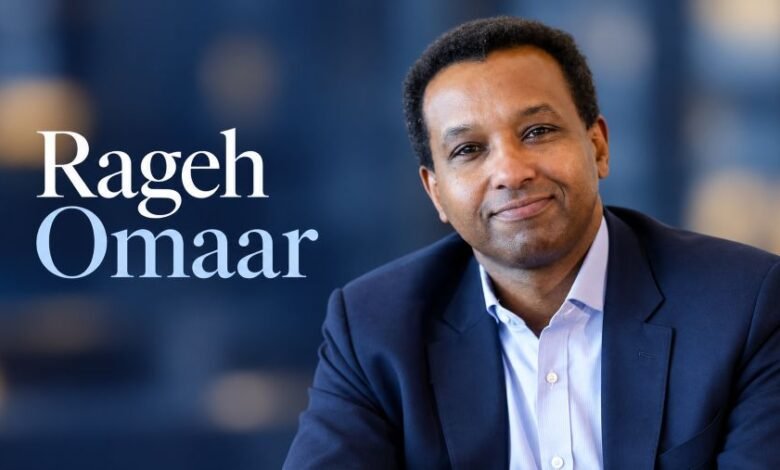
Rageh Omaar: The Journalist Who Became a Familiar Face on British TV
From his childhood in Somalia to reporting from Baghdad and presenting ITV News, here is the story of a journalist whose career has taken him across the world.

Introduction
Rageh Omaar is a British journalist, television presenter and author of Somali origin. He is best known for his BBC reporting during the 2003 Iraq War and his later work with ITV News.
His career has covered several decades. He has reported from conflict areas, interviewed people affected by major world events and presented television documentaries.
But his story began far from British television.
Born in Somalia, he moved to Britain as a child, studied history at Oxford and built his journalism career through newspaper and radio reporting.
Today, ITV identifies him as its International Affairs Analyst and presenter of On Assignment.
Quick Facts About Rageh Omaar
| Detail | Information |
|---|---|
| Full Name | Rageh Omaar |
| Known As | Rageh Omaar |
| Birth Year | 1967 |
| Birthplace | Mogadishu, Somalia, according to Al Jazeera |
| Age | 59 in October 2026 |
| Nationality | British |
| Heritage | Somali |
| Profession | Journalist, television presenter, author |
| Education | Cheltenham College and University of Oxford |
| University | New College, Oxford |
| Degree | Modern History |
| Career Started | 1990 |
| Famous For | BBC coverage of the 2003 Iraq War |
| Former Networks | BBC, Al Jazeera English |
| ITV Joined | January 2013 |
| Current ITV Role | International Affairs Analyst |
| Wife | Nina, as named in his published interview |
| Children | Three |
| Father | Abdullahi Omaar |
| Mother | Sahra Omaar |
| Books | Revolution Day and Only Half of Me |
Early Life and Childhood in Somalia
Rageh Omaar was born in Somalia in 1967.
He spent his early childhood in Mogadishu. Those years left him with warm memories of family gatherings, sandy beaches and the busy streets of the Somali capital.
Life was different then.
His family lived in a country going through political and social change. Still, his parents worked to give their children a stable upbringing.
His father, Abdullahi Omaar, was an accountant who later became a businessman. He also established an independent newspaper in Somalia.
His mother, Sahra, played a central part in family life.
In a 2017 interview with The Guardian, Rageh remembered his childhood as happy. He spoke about the support he received from his parents and their belief in education.
Then came a major change.
In 1973, aged six, he moved to London. His father wanted his children to have more educational opportunities.
For a young boy, Britain felt unfamiliar.
The weather was colder. The streets looked different. Even the bright signs and advertising caught his attention.
Yet he adapted.
Those early experiences later became part of his public reflections on family, identity and belonging.
Education and University Years
Education mattered in his household.
After moving to Britain, Rageh attended boarding school. His education included Cheltenham College in Gloucestershire.
He later entered New College, Oxford.
There, he studied Modern History.
It was a subject that suited his interests. He enjoyed learning about countries, governments and events that had changed societies.
But he had another interest.
Journalism.
In an interview with The Independent, he explained how his time at Oxford helped him learn to write and build an argument.
He also joined a student strategic studies group, where he heard visiting diplomats speak about international affairs.
Those discussions stayed with him.
He graduated in 1990 and decided to try journalism rather than follow a legal career.
His father initially preferred law. Still, Rageh wanted to give reporting a chance.
That decision changed everything.
How His Journalism Career Started
His first professional role was at The Voice, a newspaper based in Brixton, London.
It was 1990.
He worked as a trainee journalist and began learning how news stories were found, checked and written.
He then worked briefly for City Limits magazine.
But office-based reporting was not enough.
He wanted to work abroad.
In 1991, he travelled to Ethiopia and began freelance reporting for the BBC World Service.
That move opened new doors.
He covered events affecting ordinary people, including difficult living conditions and major changes across the region.
Working in East Africa also brought him closer to subjects he already cared about.
Soon, the BBC became a major part of his career.
BBC Career and International Reporting
Rageh Omaar spent many years working for the BBC.
His assignments took him across Africa, the Middle East and other parts of the world.
He reported on drought in Ethiopia and serious flooding in Mozambique. He also covered the conflict between Ethiopia and Eritrea.
These were difficult stories.
Some involved displacement, destruction and the loss of life.
He also reported from Afghanistan.
According to the Royal United Services Institute, he was inside Taliban-held Kabul when the city fell in 2001.
For a foreign correspondent, access to events like these required difficult reporting decisions.
His work brought viewers news from places they rarely saw in everyday television coverage.
Then, in 2003, his career reached a new level of public attention.
Why the Iraq War Made Him Famous
The 2003 Iraq War introduced Rageh Omaar to a much bigger television audience.
He reported from Baghdad for the BBC during the US-led invasion of Iraq.
His reports were carried internationally, including in the United States.
Millions of viewers were watching the conflict.
They wanted to understand what was happening in the Iraqi capital, and the BBC’s Baghdad coverage became an important source of news.
Rageh was among the journalists reporting from the city.
His coverage looked at the war and its effects on people living through it.
The assignment brought him widespread recognition.
Al Jazeera’s official biography later described his Iraq reporting as the work that made him widely known.
But this was not the end of his story.
He continued his journalism career and moved into longer television reports and documentary programmes.
His Move to Al Jazeera English
In 2006, Rageh Omaar joined Al Jazeera English.
It was a major career move.
He became a presenter of Witness, a documentary programme featuring stories from different parts of the world.
The format gave more time to individual stories than a short television news bulletin.
He later presented The Rageh Omaar Report, which began in 2010.
The programme covered international affairs and serious public issues.
This work allowed him to spend more time explaining events and introducing viewers to the people involved.
His experience as a foreign correspondent helped him handle subjects that needed careful research.
After several years with Al Jazeera, another British television network offered him a new role.
Joining ITV News
In January 2013, Rageh Omaar joined ITV News as a Special Correspondent.
His experience made him a recognised figure in international reporting.
He covered major world events and contributed to ITV’s television news programmes.
He also became associated with News at Ten.
Over time, he held senior international affairs responsibilities at the broadcaster.
His work included reporting from abroad, presenting news and producing longer features.
ITV’s On Assignment was another important part of his career.
The programme focuses on international stories that need more background than the normal daily news.
He helped explain issues involving people, governments and changing conditions in different countries.
As of October 2026, ITV’s official website lists him as its International Affairs Analyst.
It also identifies him as a presenter of On Assignment.
Television Documentaries and Other Work
Rageh Omaar has worked beyond daily news.
He has presented programmes dealing with history, religion and international affairs.
One example is The Life of Muhammad, broadcast by BBC Two in 2011.
The documentary series examined the life of the Prophet Muhammad and the historical background of Islam.
He also presented The Ottomans: Europe’s Muslim Emperors, a BBC documentary series broadcast in 2013.
His documentary work allowed him to use his interest in history alongside his reporting experience.
Several of his programmes have dealt with subjects involving different communities, cultures and beliefs.
That connection between history and journalism has remained part of his professional work.
Awards and Professional Achievements
His journalism has received recognition from established broadcasting organisations.
According to his profile at the Royal United Services Institute, his professional honours include:
- A Peabody Award associated with reporting from Darfur, Sudan.
- A BAFTA for BBC coverage of Afghanistan.
- A Royal Television Society Award connected with reporting on the Ethiopia–Eritrea conflict.
- The Prix Bayeux International Award for reporting on the same conflict.
These honours reflect work completed during major international news events.
Some awards recognise coverage produced by reporting teams rather than a single correspondent.
His career also brought him invitations to discuss journalism with students.
New College, Oxford, has welcomed him back to speak about his experiences and professional life.
The college has also identified him as a Dummett Visiting Fellow.
Books Written by Rageh Omaar
Writing has been another part of his professional life.
He has published two books covering subjects connected to his reporting and personal experiences.
Revolution Day: The Real Story of the Battle for Iraq
Published in 2005, Revolution Day discusses the Iraq War.
The book draws on the events surrounding the invasion and the lives of people affected by the conflict.
It also gives readers a longer account than television news could usually provide.
His Baghdad reporting helped inform the book.
Only Half of Me: Being a Muslim in Britain
Published in 2006, Only Half of Me takes a more personal approach.
The book discusses British Muslim identity and the experience of growing up between different cultural backgrounds.
Rageh uses his own life to discuss questions of belonging, religion and society.
The subject is closely connected to his childhood in Somalia and education in Britain.
Both books remain part of his published work.
His Parents and Family Background
Family has been important throughout his life.
His father, Abdullahi, worked in accounting before building several businesses.
According to Rageh’s interview with The Guardian, his father had business interests involving agricultural machinery and beverages.
He also started a newspaper.
Although his father had worked in publishing, he initially discouraged Rageh from becoming a journalist.
He wanted his son to become a lawyer.
Rageh chose another direction.
In the same interview, he said his father eventually became proud of his journalism career.
Abdullahi died in 2009, aged 79.
His mother, Sahra, was described by Rageh as a loving person who held the family together.
Both parents placed strong importance on education.
He later carried many of those lessons into raising his own children.
Is Rageh Omaar Married?
Yes. Rageh Omaar is married.
In his 2017 interview with The Guardian, he referred to his wife as Nina.
The couple have three children.
They generally keep their family life away from constant media attention.
Still, Rageh has occasionally discussed what being a parent means to him.
He has spoken about the emotional experience of holding his first child and learning to handle the responsibility of fatherhood.
His family experiences also shaped how he understood the decisions his parents made when he was young.
How Many Children Does He Have?
Rageh Omaar has three children.
Their names were publicly identified in his 2017 family interview as Loula, Sami and Zachary.
He discussed teaching his children to become independent.
He wanted them to learn everyday skills and develop confidence in their own decisions.
His approach reflected lessons from his own childhood.
He also spoke about travelling as a family while his children were growing up.
What Happened to Him on ITV in 2024?
On 26 April 2024, Rageh Omaar became unwell while presenting ITV’s News at Ten.
Viewers noticed that he appeared to be having difficulty reading parts of the bulletin.
The broadcast caused public concern.
ITV later confirmed that he had received medical treatment in hospital.
On 27 April, the broadcaster said he was recovering at home with his family.
Rageh thanked the medical staff, colleagues and viewers who had supported him.
He also said he had been determined to finish presenting the programme.
ITV’s public statement did not provide a specific medical diagnosis.
For that reason, reports about an exact medical condition should not be treated as confirmed medical information.
His Return to Television in 2025
After his illness, Rageh spent time away from regular on-screen reporting.
He gradually returned to professional work.
On 11 April 2025, he appeared in a recorded ITV report from West Africa.
The report marked his return to a major foreign reporting assignment after his illness.
His appearance attracted attention because viewers had followed news of his recovery.
ITV’s official reporting archive later published further international coverage under his name.
His profile continued to list him as an international affairs journalist.
What Is He Doing in 2026?
Rageh Omaar remains listed on ITV News’ official website as an International Affairs Analyst.
His profile describes his responsibility for covering major international stories.
It also lists his work with On Assignment.
Published ITV reports from 2025 include coverage of Afghan refugees, international climate discussions and relations between India and Pakistan.
Those reports confirm that he returned to active foreign affairs coverage.
There is no verified announcement in the sources reviewed confirming a different position for him in October 2026.
What Makes His Career Different?
His career began in print journalism.
Then came radio.
Television followed.
Those changes gave him experience in several forms of reporting.
His childhood also gave him a personal connection to more than one culture.
He grew up in Somalia and received much of his education in Britain.
Later, he reported from countries facing wars and major political changes.
His work required him to explain events for audiences who were often thousands of miles away.
That has remained a common feature of his journalism.
He has also moved between breaking news, documentaries and books.
Each format gave him a different way to tell a story.
Final Thought
Rageh Omaar has spent much of his working life reporting on major world events.
His career began with a trainee job in London. It took him to Ethiopia, Afghanistan, Iraq and other parts of the world.
The 2003 Iraq War brought him widespread attention, but he continued to work in international journalism long afterward.
His time at the BBC, Al Jazeera English and ITV shows how his career changed over the years.
Away from broadcasting, he has written books about war and British Muslim identity.
His return to reporting in 2025 was another important moment in a career already spanning more than three decades.
Frequently Asked Questions
1. Who is Rageh Omaar?
Rageh Omaar is a Somali-born British journalist, author and television presenter. He is widely known for BBC reporting during the 2003 Iraq War and his work with ITV News.
2. How old is Rageh Omaar?
He was born in 1967 and is 59 years old as of October 2026.
3. Where was he born?
Al Jazeera’s official biography identifies Mogadishu, Somalia, as his birthplace. Some other biographies provide a different location.
4. Who is his wife?
His wife is known as Nina in his published family interview with The Guardian.
5. Does he have children?
Yes. He has three children, named Loula, Sami and Zachary in a 2017 interview.
6. Where did he study?
He attended Cheltenham College and studied Modern History at New College, Oxford.
7. Why did he become famous?
His reporting from Baghdad during the 2003 Iraq War brought him international recognition.
8. What happened to him during ITV News in 2024?
He became unwell during a live bulletin on 26 April 2024. ITV confirmed that he received hospital treatment and later recovered at home.
9. Did he return to ITV after his illness?
Yes. He returned to international reporting, including a West Africa report broadcast in April 2025.
10. What books has he written?
He has written Revolution Day: The Real Story of the Battle for Iraq and Only Half of Me: Being a Muslim in Britain.