
Valplekar: What Does This Swedish Word Really Mean?
From playful puppies to early learning, discover the meaning behind this unusual word and why people are searching for it.

Introduction
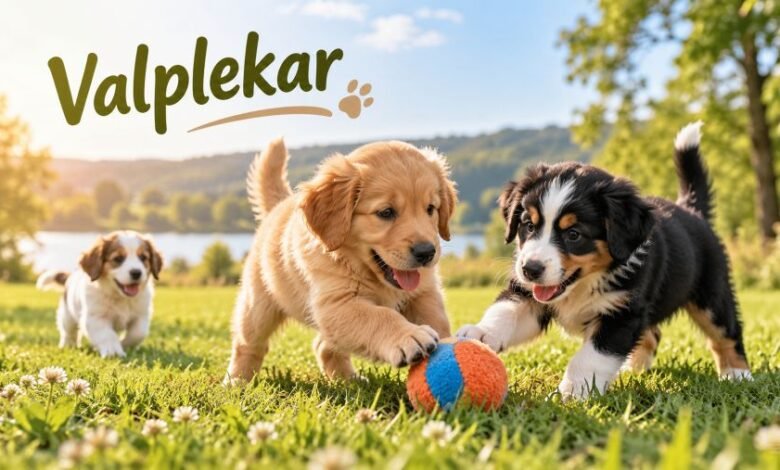
Valplekar might look like a strange word at first. Yet its basic meaning is surprisingly simple. It comes from Swedish and refers to puppy games, playful activities, and the natural ways young dogs interact with their surroundings.
But there is more to understand.
The term has appeared across online articles discussing dog behaviour, early development, language, and even family names. With different explanations circulating, it can be difficult to separate the real meaning from online speculation.
So, what exactly does it describe? And why does puppy play matter so much?
Let’s look at the facts.
Quick Facts
| Detail | Information |
|---|---|
| Keyword | Valplekar |
| Main meaning | Puppy games or puppy play |
| Language | Swedish |
| Word structure | Valp + lekar |
| English translation | Puppy games |
| Main subject | Puppy behaviour and development |
| Common activities | Gentle tug, toy games, scent games |
| Main benefits | Learning, confidence, social skills |
| Training approach | Positive reinforcement |
| Formal training programme? | No established evidence |
| Other reported usage | Possible Indian surname |
What Does the Word Actually Mean?
The simplest explanation begins with two Swedish words.
Valp means puppy, while lekar means games or forms of play. When combined, they form an expression referring to activities involving young dogs.
The meaning is straightforward.
It describes the playful behaviour puppies naturally display while interacting with toys, other animals, people, and their surroundings.
For example, a young dog chasing a soft toy, investigating a new object, or gently playing with another puppy is taking part in activities that fit this description.
The word does not identify a particular dog breed, commercial product, or certified training programme.
Instead, it describes an everyday part of puppy life.
The linguistic explanation is consistent with published Swedish vocabulary and discussions of puppy play.
Where Did the Term Come From?
Its roots are connected to the Swedish language.
Swedish frequently combines existing words to form expressions describing everyday objects, actions, or activities.
This makes the construction of this particular term understandable.
The first component identifies the animal. The second describes the activity.
Together, they communicate a simple idea: puppies playing.
Although several English-language blogs describe broader cultural meanings, there is little reliable evidence supporting claims that the expression began as an ancient philosophy or organised training practice.
Its clearest use remains connected to dogs.
Why Puppy Play Matters More Than People Think
Watching puppies play can be entertaining. They chase toys, tumble around, investigate strange objects, and sometimes become excited over the smallest things.
Those moments also provide learning opportunities.
Young dogs gain experience through movement, interaction, and discovery.
Play allows them to practise different behaviours in relatively safe situations.
Building Social Skills
Puppies must learn how to communicate with other dogs.
They do not automatically understand every social signal.
During suitable play, they begin recognising body language, responding to invitations to interact, and noticing when another animal wants space.
A healthy interaction usually includes relaxed movement, voluntary participation, and opportunities for both puppies to disengage.
Not every dog enjoys the same type of play.
Some prefer gentle contact. Others enjoy chasing games. Owners should respect these differences rather than forcing interactions.
Supporting Physical Development
Play also involves movement.
Running across a safe surface, walking around objects, and gently chasing toys allow puppies to practise balance and coordination.
However, young dogs are still growing.
Repeated high jumps, forced running, and exhausting exercise are not appropriate for every puppy.
The aim should be comfortable, age-appropriate movement rather than intense physical activity.
Encouraging Confidence
A puppy meeting a harmless new object may initially appear uncertain.
Perhaps it approaches slowly.
Maybe it stops to investigate.
When the animal is allowed to move at its own pace, a successful experience can help build confidence.
This is especially useful when introducing unfamiliar surfaces, sounds, toys, or environments.
The important part is choice.
A frightened puppy should never be forced to continue an activity simply because an owner considers it harmless.
Providing Mental Stimulation
Dogs need mental activity as well as physical movement.
Simple games can encourage curiosity and problem-solving.
Hiding a treat under a suitable toy, allowing a puppy to sniff for food, or introducing a safe puzzle feeder can provide opportunities to think and investigate.
The activity should remain enjoyable.
If a game becomes too difficult, making it easier can help the puppy succeed.
Simple Games Owners Can Try at Home
You do not need expensive equipment to make playtime useful.
A few suitable toys, a safe space, and a little patience are often enough.
1. Find the Treat
Place a small treat somewhere easy for the puppy to discover.
Allow the animal to sniff around until it finds the reward.
Once the puppy understands the activity, increase the difficulty slightly.
This encourages natural scent-seeking behaviour.
2. Gentle Tug
Choose a soft toy designed for dogs.
Allow the puppy to hold one end while you gently hold the other.
Avoid pulling aggressively or lifting the puppy off the ground.
Teach a friendly release cue by exchanging the toy for a reward.
Short sessions can help create enjoyable interaction between the owner and dog.
3. Toy Discovery
Introduce one safe, unfamiliar toy.
Let the puppy investigate independently.
Do not force contact.
This simple activity offers a new experience without requiring a complicated training routine.
4. Short Retrieval Games
Roll a soft toy a short distance across the floor.
Encourage the puppy to follow it.
If the puppy returns with the toy, reward the behaviour.
If it prefers to investigate instead, that is fine too.
The activity should remain relaxed and should not involve repetitive strenuous exercise.
5. Hide and Seek
Ask another person to remain with the puppy while you move a short distance away.
Call the puppy in a cheerful voice.
When it finds you, offer praise or a small reward.
This can make coming when called a positive experience.
How Much Playtime Does a Puppy Need?
There is no single playtime limit suitable for every puppy.
Age, breed, temperament, physical health, and individual energy levels all matter.
A very young puppy may enjoy a brief game and then need a long rest.
Another puppy might prefer several gentle activities spread throughout the day.
Owners should focus on the puppy’s response rather than following a rigid timetable.
Watch for signs such as tiredness, reduced interest, excessive excitement, or difficulty settling down.
When these appear, stop the activity and allow the puppy to rest.
Young dogs also need plenty of sleep.
Play should support healthy development, not interfere with recovery.
Understanding Healthy and Unhealthy Play
Not every energetic interaction is necessarily enjoyable.
Owners should pay attention to body language.
| Healthy play | Signs to interrupt play |
|---|---|
| Relaxed body movement | Stiff posture |
| Both dogs participate willingly | One dog repeatedly tries to escape |
| Brief pauses during interaction | Continuous chasing without breaks |
| Playful approaches | Persistent fear or hiding |
| Comfortable return to play | Yelping, distress, or escalating aggression |
A wagging tail alone does not prove that a dog is comfortable.
Look at the whole animal.
If one puppy repeatedly tries to leave, separate the dogs calmly.
A short break can prevent an uncomfortable situation from getting worse.
The Connection Between Play and Early Socialisation
Socialisation involves helping puppies develop comfortable responses to people, animals, sounds, places, and everyday experiences.
Play can form part of that process.
However, socialisation is not simply about meeting as many dogs as possible.
Quality matters.
The American Veterinary Society of Animal Behavior identifies the first three months of life as an especially important socialisation period.
During that time, puppies benefit from positive, carefully managed experiences.
Safe puppy classes may also be useful when appropriate vaccination and hygiene measures are followed.
Owners should consult their veterinarian about local disease risks and suitable activities.
A puppy does not need to visit crowded dog parks or interact with unfamiliar animals to benefit from early learning.
Sometimes watching the world calmly from a safe distance is a better experience.
Common Mistakes During Puppy Play
Even well-meaning owners can make mistakes.
Playing for too long: Puppies may become overtired or overstimulated, particularly when exciting activities continue without breaks.
Choosing unsuitable toys: Small objects, loose pieces, and easily swallowed materials can create choking or intestinal obstruction risks.
Forcing social interaction: Introducing a nervous puppy to unfamiliar dogs too quickly may increase fear rather than confidence.
Encouraging rough behaviour: Games should not reward uncontrolled biting or repeated aggressive contact.
Ignoring rest: Puppies require regular sleep and quiet time to support normal growth.
Using punishment: Harsh corrections can create fear and damage the animal’s willingness to participate.
Reward-based methods are generally recommended by veterinary behaviour professionals.
Is It a Formal Dog Training Method?
No established evidence identifies this expression as a recognised, standardised dog training programme.
That distinction matters.
An ordinary descriptive word should not automatically be treated as the name of a certified training system.
Dog training may include activities such as recall practice, reward-based learning, controlled introductions, and interactive play.
These activities can be useful.
However, their effectiveness depends on how they are carried out, not on giving them an unfamiliar name.
Owners should assess training advice using established animal welfare guidance rather than relying on impressive-sounding terminology.
Is the Word Also an Indian Surname?
Some online articles describe Valplekar as a surname associated with western India, including Maharashtra and Goa.
A number of these explanations connect the name with regional naming customs.
For instance, the ending -kar appears in many surnames associated with Marathi- and Konkani-speaking communities.
However, the specific history and origin of this surname have not been independently established by strong genealogical or historical sources.
It would therefore be misleading to assign it a definite caste, family lineage, ancestral village, or traditional occupation without documentation.
The possible surname usage should also be kept separate from the Swedish expression describing puppy games.
Similar spellings do not necessarily mean two words share the same origin.
Why Are People Searching for It Online?
Unfamiliar words often attract attention because people want to understand their meaning.
This can happen when a term appears in an article, search suggestion, social media discussion, or website heading.
In this case, online explanations vary considerably.
Some pages focus on Swedish vocabulary.
Others describe pet care, personal development, family names, or fictional travel destinations.
The result is confusion.
A reader encountering several different descriptions may assume they all refer to the same subject.
They do not necessarily do so.
There is no reliable evidence establishing the word as the name of a specific tourist destination or an ancient cultural tradition.
It is better to begin with the supported language meaning and treat unrelated claims cautiously.
How Does Play Differ From Regular Training?
Both activities can support learning, but they do not always have the same immediate goal.
Play primarily focuses on enjoyable interaction, movement, investigation, and natural behaviour.
Training generally involves helping an animal learn a particular response or skill.
For example, a puppy chasing a toy is playing.
When an owner rewards the puppy for returning the toy on request, the activity also becomes a training opportunity.
The two can work together.
A short, enjoyable game can help maintain attention and encourage cooperation without placing excessive demands on a young dog.
The best approach depends on the puppy’s age, comfort, and abilities.
Tips for Creating a Safe Play Environment
A suitable play space does not have to be large or expensive.
It should simply be comfortable and free from obvious hazards.
Remove sharp objects, electrical cables, small choking hazards, and unsafe household items.
Choose toys that match the puppy’s size and chewing habits.
Avoid slippery surfaces when possible.
Provide drinking water and a quiet resting place nearby.
If other dogs are involved, supervise the interaction and make sure each animal has an opportunity to move away.
Owners should also inspect toys regularly.
Damaged items can become dangerous when small pieces break off.
Good supervision makes a difference.
Final Thought
Valplekar has a simple, useful meaning rooted in Swedish: puppy games and playful activities.
The idea behind it is familiar to anyone who has watched a young dog investigate the world.
Puppies learn through experience. They move, sniff, interact, make mistakes, and gradually become more comfortable with their surroundings.
Safe play gives them opportunities to practise those skills.
For owners, the lesson is equally simple. Choose suitable activities, observe your puppy’s behaviour, reward positive experiences, and allow enough rest.
Playtime should be enjoyable.
And sometimes, a soft toy and a quiet room are all a puppy needs.
Frequently Asked Questions
1. What does Valplekar mean in English?
It means puppy games or puppy play. The term comes from the Swedish words valp, meaning puppy, and lekar, meaning games or play activities.
2. Is it a dog breed?
No. It is not the name of a recognised dog breed. Its primary meaning relates to playful activities involving puppies.
3. Is it a professional training system?
There is no established evidence that it refers to a certified or standardised dog training system.
4. Why is puppy play important?
Suitable play can support physical coordination, social learning, mental stimulation, and positive experiences with people and other animals.
5. Can young puppies play with other dogs?
Yes, when the interaction is appropriate and carefully supervised. Owners should consider vaccination status, health, temperament, and advice from their veterinarian.
6. Does the word have an Indian meaning?
Some online sources describe it as an Indian surname, but its precise history and regional origin remain insufficiently verified.
7. Is it a real tourist destination?
I found no reliable geographical evidence establishing it as a recognised travel destination. Online descriptions of such a location should be treated cautiously.
8. What are the best games for puppies?
Gentle tug, short retrieval games, treat-searching activities, toy discovery, and simple hide-and-seek games are useful options when matched to a puppy’s age and abilities.