

Bodenxt: What It Is and Why Boden’s Green Transformation Matters
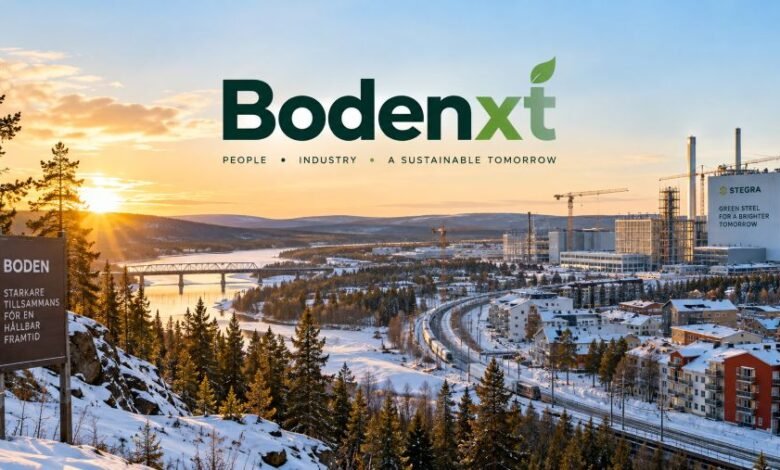
Bodenxt is helping the Swedish municipality of Boden handle rapid industrial growth, new housing demand, jobs, infrastructure, and a much bigger population shift.

Introduction
Bodenxt is the name used by the Municipality of Boden in northern Sweden for its large-scale social and green development programme.
It is not an AI platform. It is not downloadable software. And it is not a single construction project.
Instead, Bodenxt brings several parts of Boden’s growth under one broad development platform, including housing, workforce needs, business growth and infrastructure. The municipality says the changes taking place over only a few years are comparable to around 20 years of normal social development.
Quick Facts About Bodenxt
| Fact | Details |
|---|---|
| Name | Bodenxt |
| Location | Boden, northern Sweden |
| Type | Municipal development platform |
| Managed by | Municipality of Boden |
| Main purpose | Support Boden’s rapid green and industrial transition |
| Main areas | Skills, housing, business and infrastructure |
| Major industrial connection | Stegra |
| Software product? | No |
| Current focus | Growth, housing, jobs, infrastructure and social development |
What Is Bodenxt?
The simplest way to understand Bodenxt is to think of it as Boden’s plan for managing very fast change.
Boden has attracted major industrial investment. That brings jobs, workers, businesses and money into the area, but it also brings practical problems.
Where will thousands of workers live?
Are there enough roads, railway connections, schools and public services?
Can local employers find the right workers?
Can new companies establish themselves quickly?
Bodenxt exists to bring these questions together instead of treating each one as a separate problem.
The Municipality of Boden describes it as its platform for the major green transition of society in Boden.
Is Bodenxt a Company or Software Platform?
No.
This distinction matters because several pages on the internet use the Bodenxt name in other ways.
Official municipal information does not describe Bodenxt as an AI application, blockchain system, SaaS product or technology company. The municipality presents it as a development platform connected with the physical, economic and social growth of Boden.
There are also unrelated websites using the Bodenxt name, including content-oriented sites. Those should not be confused with the official Boden Municipality initiative.
For anyone researching the term, boden.se is the primary source for the Swedish project.
Why Was Bodenxt Created?
Boden is experiencing an unusual level of investment and population movement.
A major reason is Stegra, the company previously known as H2 Green Steel, which is developing a large green-steel operation in Boden.
The project has increased demand for workers, contractors, homes, transport links and local services.
But the industrial site is only one part of the story.
Boden also has activity connected with defence, local companies, energy, digital infrastructure and other sectors. The municipality therefore needs the wider town to grow alongside industrial development.
That is where Bodenxt comes in.
The Five Main Areas of Bodenxt
The municipality says Bodenxt was organised around five sub-projects or development areas.
1. Skills Supply
New industries need people.
Boden therefore has to attract engineers, industrial workers, technical specialists and people working in supporting sectors.
Training local residents is also part of this work.
In January 2026, for example, Boden announced a new engineering programme aimed at preparing people for emerging jobs connected with industry and defence.
Recruitment does not stop with finding employees either. Families and partners moving with workers need homes, schools, jobs and community connections.
This makes workforce growth a town-planning issue as much as an employment issue.
2. Living and Housing
Housing may be Boden’s most immediate problem.
In May 2026, the municipality reported that the vacancy rate for rental apartments was close to zero.
It said eleven detailed development plans could make room for about 1,300 apartments and 500 detached houses, although high construction costs and financing conditions were slowing projects.
That creates a difficult situation.
Jobs may be available, but workers cannot settle permanently if they cannot find somewhere to live.
The shortage also affects existing residents. Young adults looking for their first home, families moving within the area and older people looking for smaller properties all compete in the same tight market.
Housing is therefore not simply a property issue for Bodenxt. It affects recruitment, population growth and the wider economy.
3. Business Development
Large industrial investment creates work far beyond the factory gates.
Restaurants, shops, construction companies, logistics businesses, professional services and local suppliers can all see additional demand.
Boden Municipality reported in May 2026 that the municipality remained above both regional and national averages in a Swedish Confederation of Enterprise business-climate survey, while also noting that housing, workforce supply and infrastructure increasingly affect business conditions.
This connection is important.
A town cannot attract companies with industrial land alone. Businesses also need workers, transport, utilities and places for employees to live.
Bodenxt tries to connect those pieces.
4. Infrastructure Above Ground
Growth puts pressure on roads, railways and transport systems.
One visible example is the railway connection to Boden Industrial Park.
The municipality reported that the railway had been completed ahead of schedule and under budget, and it was officially inaugurated in June 2026.
Rail infrastructure matters because heavy industry needs efficient movement of materials and products.
Better connections can also make the wider industrial area more attractive for future businesses.
5. Infrastructure Below Ground
Some of the most important work cannot be seen.
Water, sewage, power connections and other utility systems have to handle a growing population and expanding industry.
In 2026, work began on expanding the Svedjan wastewater treatment facilities. The municipality said existing treatment capacity was already under pressure and that greater capacity was needed for additional homes, residents and businesses.
These projects may receive less attention than a new factory or railway, but they determine how much growth a town can realistically support.
The Link Between Bodenxt and Stegra
Stegra is one of the biggest forces behind Boden’s recent growth.
The municipality previously said that around 1,500 people were expected to work at the Stegra site initially, eventually rising to roughly 2,000 employees.
Thousands of construction and contract workers have also created temporary accommodation needs.
In April 2026, Boden Municipality reported that a new financing round of approximately SEK 16 billion would allow construction of the green-steel plant to continue.
Still, Bodenxt and Stegra are not the same thing.
Stegra is an industrial company. Bodenxt is the municipality’s wider development platform.
That difference is easy to miss.
Population Growth Is Changing Boden
Industrial expansion is already affecting population movement.
Official 2025 statistics showed that Boden grew faster than the municipality had projected, while migration into the municipality from outside Norrbotten County also increased.
The change brings opportunity.
More residents can support shops, restaurants, schools, services and local businesses.
But fast population growth also means demand can rise before new homes and infrastructure are ready.
Boden is experiencing exactly that tension.
Boden Sustainability Center
Boden is also looking beyond factories and physical infrastructure.
In June 2026, the municipality announced funding to move forward with the Boden Sustainability Center, a project focused on the social side of the town’s transition.
The project budget exceeds SEK 16 million, with work planned from autumn 2026 until summer 2029. Partners include the Municipality of Boden, Stegra, Polar Structure, Boden Tillsammans and Boden Business Park.
The aim is to make sure industrial growth also supports a community where people can live, meet and build long-term connections.
That may become increasingly important as more international workers and families arrive.
Why Bodenxt Matters Outside Sweden
Boden is an interesting case because many regions want green industrial investment.
Getting the factory, however, is only the beginning.
A major employer can suddenly create demand for:
- thousands of workers;
- apartments and houses;
- schools and childcare;
- roads and railway connections;
- water and wastewater capacity;
- restaurants and shops;
- healthcare and public services;
- local suppliers;
- training programmes.
If these systems cannot grow at roughly the same pace, industrial investment can produce bottlenecks.
Bodenxt offers a real-world example of a municipality trying to manage all those pressures together.
What Are the Biggest Challenges?
Housing is currently one of the clearest obstacles.
Boden has development plans available, but actual construction has struggled to keep pace with demand. High building costs and financing risks remain significant barriers.
Infrastructure must also expand quickly without creating unnecessary long-term costs.
Then there is the human side.
Bringing someone to Boden for a job is one thing. Convincing that person and their family to remain there for many years is another.
Good housing, schools, leisure activities, employment opportunities for partners and a sense of community all matter.
That is why Bodenxt covers more than industry.
Is Bodenxt Still Active in 2026?
Yes.
Municipality updates published during 2026 continue to place projects involving housing, skills, business, infrastructure and Stegra under the Bodenxt programme.
Recent examples include the industrial-park railway, housing initiatives, workforce programmes and the Boden Sustainability Center.
The programme should therefore be understood as ongoing municipal development work rather than a completed project.
Final Thought
Bodenxt sounds like the name of a technology startup. In reality, it is something quite different.
It is Boden Municipality’s attempt to manage an exceptionally fast period of industrial and social change.
Factories are only one piece.
People need homes. Companies need workers. Industry needs railways and utilities. Families need schools and services. The town itself needs enough capacity to support everyone arriving.
That broader picture is what Bodenxt represents.
For readers searching the term in 2026, the simplest answer is this: Bodenxt is Boden Municipality’s coordinated platform for building the community around northern Sweden’s fast-growing green industrial economy.
Frequently Asked Questions
What is Bodenxt?
Bodenxt is a development platform run by the Municipality of Boden in northern Sweden. It coordinates work involving housing, jobs, skills, businesses and infrastructure during the municipality’s rapid growth.
Is Bodenxt an AI platform?
No. The official municipal Bodenxt project is not an AI application or downloadable software platform.
Where is Bodenxt based?
It is connected with Boden Municipality in Norrbotten, northern Sweden.
Who runs Bodenxt?
The official initiative is run by the Municipality of Boden.
What does Stegra have to do with Bodenxt?
Stegra’s large industrial investment in Boden is one of the main forces accelerating employment, housing and infrastructure demand. Bodenxt covers the wider community response to that growth.
Is Bodenxt a company?
No. The official Bodenxt described by Boden Municipality is a municipal development platform, not a private company.
What are Bodenxt’s main areas?
Its work covers skills supply, living and housing, business development, and infrastructure above and below ground.
Why is housing important to Bodenxt?
Rapid recruitment and population growth have created very high housing demand. In May 2026, Boden Municipality said the rental-apartment vacancy rate was close to zero.