
Dominic Frisby: The Man Who Made Money, Comedy and History His Career
From British comedy stages to financial journalism, discover Dominic Frisby's early life, education, books, BBC radio work and career in 2026.

Introduction
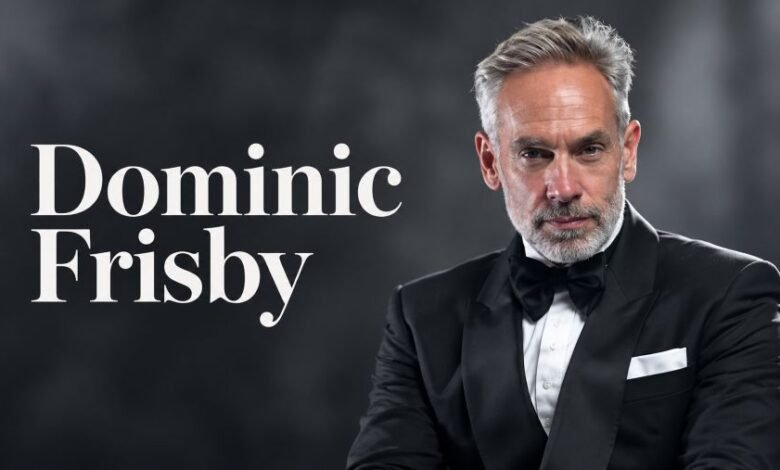
Dominic Frisby has an unusual career. He writes about money. He performs comedy. And he has built a public following through both.
The British author and comedian is best known for his writing on gold, Bitcoin, taxation and financial markets. He is a long-time contributor to MoneyWeek and publishes the financial newsletter The Flying Frisby.
But finance tells only part of his story.
Frisby has performed stand-up comedy, worked as a voice actor and hosted BBC Radio 4 programmes. His books explain serious economic questions through history, research and humour.
His career has taken many turns. Yet one interest keeps appearing: understanding how money affects people’s lives.
Quick Facts About Dominic Frisby
| Detail | Information |
|---|---|
| Full Name | Dominic Frisby |
| Date of Birth | 9 September 1969 |
| Age | 57 years old (October 2026) |
| Birthplace | London, England |
| Nationality | British |
| Profession | Author, Financial Writer, Comedian, Actor |
| Education | St Paul’s School, University of Manchester, Webber Douglas Academy |
| Known For | Financial Journalism and Comedy |
| Famous Publication | MoneyWeek |
| Newsletter | The Flying Frisby |
| Main Interests | Gold, Bitcoin, Taxation, Economic History |
| Published Books | Four |
| Latest Book | The Secret History of Gold (2025) |
Early Life and Background
Dominic Frisby was born in London on 9 September 1969.
His father was Terence Frisby, a British playwright known for his work in theatre. Dominic grew up in a family with a connection to the performing arts.
That background makes his career interesting.
Long before becoming known for financial commentary, he developed an interest in acting and entertainment. His later professional work would include stage performances, television appearances and voice acting.
Public information about his childhood remains limited. There are few reliable details about his early home life or personal experiences while growing up.
What is clear, though, is that his education included both academic study and formal acting training.
Education and Acting Training
Frisby attended St Paul’s School in London.
He later studied at the University of Manchester. After that, he trained at the Webber Douglas Academy of Dramatic Art.
His educational background reflects his early interest in performance.
Drama training helped prepare him for professional acting and comedy. His later career also required writing, public speaking and the ability to explain ideas to different audiences.
That combination became a defining part of his work.
Even his financial presentations often contain jokes. He can discuss taxation or gold prices while keeping an audience entertained.
How His Professional Career Started
Frisby’s career did not begin with financial journalism.
He first worked in entertainment, developing experience as an actor, comedian and voice-over performer.
He performed at comedy clubs around Britain. His early comedy work included character-based performances, where he played different personalities.
Among his characters were the Upper-Class Rapper, Ludwig the Bavarian and Morris the Morris Dancer.
Those performances helped establish his place in British stand-up comedy.
He also developed a professional voice-over career, lending his voice to advertising campaigns, documentaries, television productions and animated programmes.
His work eventually expanded into economics and investment writing.
It was quite a change.
Still, he continued performing comedy while building his reputation as a financial commentator.
Becoming a Financial Writer
Frisby became widely known through his writing for MoneyWeek.
The publication covers investing, personal finance, economic policy and financial markets.
His work has focused heavily on gold, commodities, currencies, mining companies and cryptocurrencies.
He has written for MoneyWeek for around two decades.
His articles often connect current market developments with events from economic history.
Gold is a recurring subject.
He has examined gold’s role as money, its relationship with inflation and why investors continue buying it during periods of economic uncertainty.
He also writes about Bitcoin.
His work discusses the cryptocurrency’s history, its monetary properties and the arguments surrounding its use as an alternative form of money.
His financial writing reflects his own economic views and analysis. Readers should distinguish those opinions from independently established investment facts.
The Flying Frisby Newsletter
Frisby also publishes a financial newsletter called The Flying Frisby.
The publication gives him a place to share longer commentary about money, markets and economic history.
Its subjects include:
- Gold and silver markets
- Bitcoin and cryptocurrencies
- Mining and resource companies
- Investment research
- Monetary history
- Inflation and government policy
- Interviews with financial commentators
The newsletter has helped him reach readers beyond traditional newspapers and magazines.
His writing style is usually direct. He often uses historical stories to explain why a financial subject matters.
For example, instead of discussing gold only through market charts, he may write about its use in ancient societies or its place in monetary systems.
That approach connects his journalism with his interest in history.
His Career in British Comedy
Comedy has remained an important part of Frisby’s professional life.
He has performed at major British comedy venues and taken shows to the Edinburgh Festival Fringe.
His early performances involved character comedy. Later, political songs and economic satire became familiar parts of his work.
His comedy often deals with government, taxation, political disagreements and British public life.
He has also performed musical comedy.
Songs such as The Libertarian National Anthem and Gammon and Proud reflect his interest in politics and social commentary.
His work is sometimes provocative. That is part of its satirical character.
Comedy also gives him another way to discuss difficult subjects.
A stage performance about taxation may sound unlikely, but Frisby has made economic topics part of his entertainment career.
Television and Voice Acting Work
Frisby has worked in several areas of British television.
His acting credits include appearances in Sam’s Game, Murder in Suburbia and The Inbetweeners Movie.
He also presented Sky Comedy Close-Up, a programme connected with comedy films.
Voice acting has been another major part of his career.
He has provided voices for advertising campaigns, documentaries and animated productions, including Roary the Racing Car.
Voice-over work requires a different set of skills from live comedy.
An actor must deliver emotion and meaning without relying on physical gestures. Frisby’s professional credits show his experience in that field.
He has continued to combine entertainment work with writing.
BBC Radio Career
Frisby has also appeared on BBC Radio.
His work includes the financial comedy programmes More Money Than Sense and Damned Lies, broadcast on BBC Radio 4.
Both programmes combined humour with questions about economics, statistics and money.
More Money Than Sense featured comedians discussing financial subjects.
Damned Lies examined how numbers and statistics can be used or misunderstood.
These programmes suited his background.
He could bring together comedy experience and financial knowledge without treating either subject as separate from the other.
His earlier radio work included appearances on Loose Ends.
Dominic Frisby’s Published Books
Frisby has published four major nonfiction books.
Each examines money or economic questions from a different angle.
Life After the State (2013)
Life After the State: Why We Don’t Need Government discusses the role of the state in society.
The book presents arguments for greater personal freedom and less government involvement.
Frisby questions how public services and social systems might work under different arrangements.
It reflects his libertarian economic and political views.
Bitcoin: The Future of Money? (2014)
This book examines Bitcoin and the development of cryptocurrency.
Frisby explains the origins of Bitcoin and the thinking behind decentralised digital money.
He also discusses the mystery surrounding Bitcoin’s creator, Satoshi Nakamoto.
The book appeared during an earlier period of Bitcoin’s development, before cryptocurrencies attracted the level of mainstream attention seen in later years.
It remains part of his established work on monetary systems.
Daylight Robbery (2019)
Daylight Robbery: How Tax Shaped Our Past and Will Change Our Future examines taxation throughout history.
The book asks how governments have collected money and how those decisions have affected society.
Frisby connects taxes with political power, historical events and economic behaviour.
The subject also developed from his comedy and stage work about taxation.
His aim is to make the history of taxation accessible through stories and examples.
The Secret History of Gold (2025)
His fourth book, The Secret History of Gold: Myth, Money, Politics and Power, was published in Britain by Penguin Business on 28 August 2025.
The American hardcover edition followed in May 2026.
The book examines gold across human history.
It considers how ancient societies valued the metal, how rulers accumulated it and how gold became connected with international monetary systems.
The book also looks at its role in modern finance.
This subject fits closely with Frisby’s long-running interest in precious metals.
His Interest in Gold and Bitcoin
Gold and Bitcoin appear frequently in Frisby’s writing.
They are different assets. But both raise questions about money, trust and government control.
Gold has a long history as a store of wealth and a form of currency.
Bitcoin is much newer. It operates through a decentralised digital network.
Frisby has written about how both fit into discussions of monetary policy and financial freedom.
He has also considered how inflation affects purchasing power.
His writing often questions conventional financial arrangements and examines alternatives.
Still, investing carries risks.
Gold prices change, Bitcoin can experience sharp price movements, and neither guarantees financial security.
His published commentary represents his analysis rather than a guaranteed outcome for investors.
Political Views and Public Commentary
Frisby is associated with libertarian political ideas.
His work frequently argues for personal freedom, lower taxation and reduced government intervention.
These ideas appear in his books, financial articles and comedy performances.
He has also written songs commenting on British political debates.
His political satire can attract disagreement because the subjects involve competing views about public policy.
He has chosen to discuss those issues openly through entertainment.
Yet his professional career extends beyond politics.
Economic history, writing, broadcasting and acting remain major parts of his public work.
Documentary and Historical Projects
Frisby has taken part in documentary productions.
He worked as a writer and narrator on Four Horsemen, a documentary dealing with economic systems and financial problems.
He also created Adam Smith: Father of the Fringe, a project connecting economic ideas with the Edinburgh Festival Fringe.
The programme looked at the festival through the ideas of economist Adam Smith.
It brought together economic discussion and the world of comedy.
This approach is familiar in Frisby’s work.
He often starts with a serious question, then finds a story or entertaining example that makes the subject easier to follow.
Personal Life and Family
Frisby has generally kept much of his personal life outside his professional writing.
His father, playwright Terence Frisby, is part of his documented family background.
Other details about his private relationships are less clearly established through primary sources.
For that reason, it would be misleading to present an unconfirmed current marriage, partner or detailed family history as fact.
His public career offers much more reliable information than his private life.
Most of his published profiles concentrate on comedy, finance and books.
Dominic Frisby’s Net Worth and Income
Dominic Frisby’s exact net worth is not publicly verified.
He has several professional activities that can generate income.
These include writing books, publishing financial commentary, comedy performances, broadcasting and voice acting.
His newsletter is also part of his publishing business.
However, professional success does not establish a person’s private wealth.
Without reliable financial records, a specific net-worth estimate would be speculation.
The same applies to his annual salary.
There is no dependable public figure that establishes his current total earnings.
His Professional Achievements
Frisby’s career has included several notable achievements.
He has maintained a long association with MoneyWeek and developed an independent financial publication.
He has published four nonfiction books and performed shows at the Edinburgh Festival Fringe.
His acting and voice-over credits cover television, advertising and entertainment.
He has also hosted financial comedy programmes for BBC Radio 4.
These accomplishments show how widely his professional work has spread.
Writing remains central to that career.
But performing has never disappeared.
What Is Dominic Frisby Doing in 2026?
Frisby remains active as a writer and comedian in 2026.
His latest book, The Secret History of Gold, continues to be available through major publishers.
He also maintains his financial newsletter and public commentary.
His writing continues to cover precious metals, economic history and investment markets.
Comedy remains part of his professional activity, with performances and comedy projects appearing in his public credits.
The combination is unusual.
Few financial commentators maintain such an established second career in entertainment.
Frisby continues to work across both fields.
Why His Career Stands Out
Financial journalism and stand-up comedy rarely follow the same professional path.
Yet Frisby has made both part of his working life.
He can write about a commodity market, discuss taxation on the radio and perform a satirical song on stage.
The subjects may sound unrelated.
Actually, many of them come back to money, public decisions and everyday life.
His work also shows how people can build careers across different industries.
He did not abandon entertainment when financial writing became important.
Instead, he continued working in both.
That choice helps explain why his professional history differs from that of a conventional financial columnist.
Final Thought
Dominic Frisby has built a career around two very different skills: explaining money and making people laugh.
His work stretches from British comedy clubs to financial publications, BBC programmes and nonfiction books.
He remains best known for his commentary on gold, Bitcoin and taxation, but his acting and broadcasting background gives his career another dimension.
His story is about following more than one professional interest.
And making both work.
Frequently Asked Questions
1. Who is Dominic Frisby?
Dominic Frisby is a British financial writer, author, comedian and voice actor. He is known for his MoneyWeek articles, books and comedy performances.
2. How old is Dominic Frisby?
He was born on 9 September 1969. He is 57 years old as of October 2026.
3. Where was Dominic Frisby born?
He was born in London, England.
4. What is Dominic Frisby famous for?
He is known for financial commentary, comedy, books about money and BBC Radio programmes.
5. Which books has Dominic Frisby written?
His four major books are Life After the State, Bitcoin: The Future of Money?, Daylight Robbery and The Secret History of Gold.
6. What is Dominic Frisby’s latest book?
His latest major book is The Secret History of Gold, first published in Britain in August 2025.
7. What is Dominic Frisby’s net worth?
His exact net worth is not publicly verified. Reliable financial figures have not been established.
8. Is Dominic Frisby still working in 2026?
Yes. His public professional activity includes financial writing, publishing and comedy.